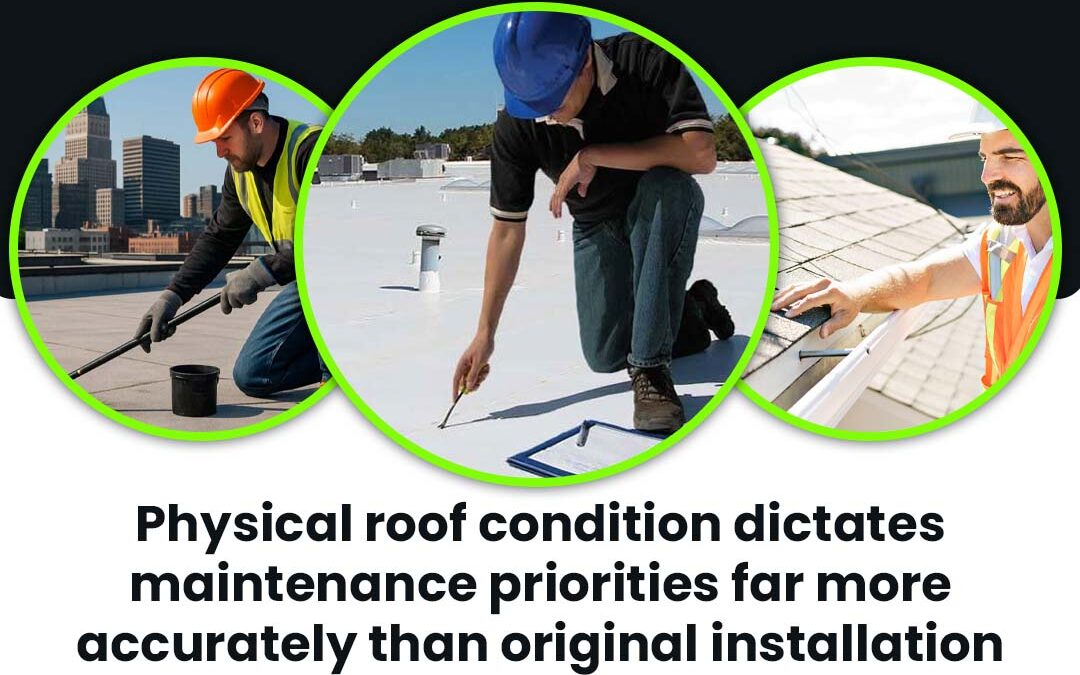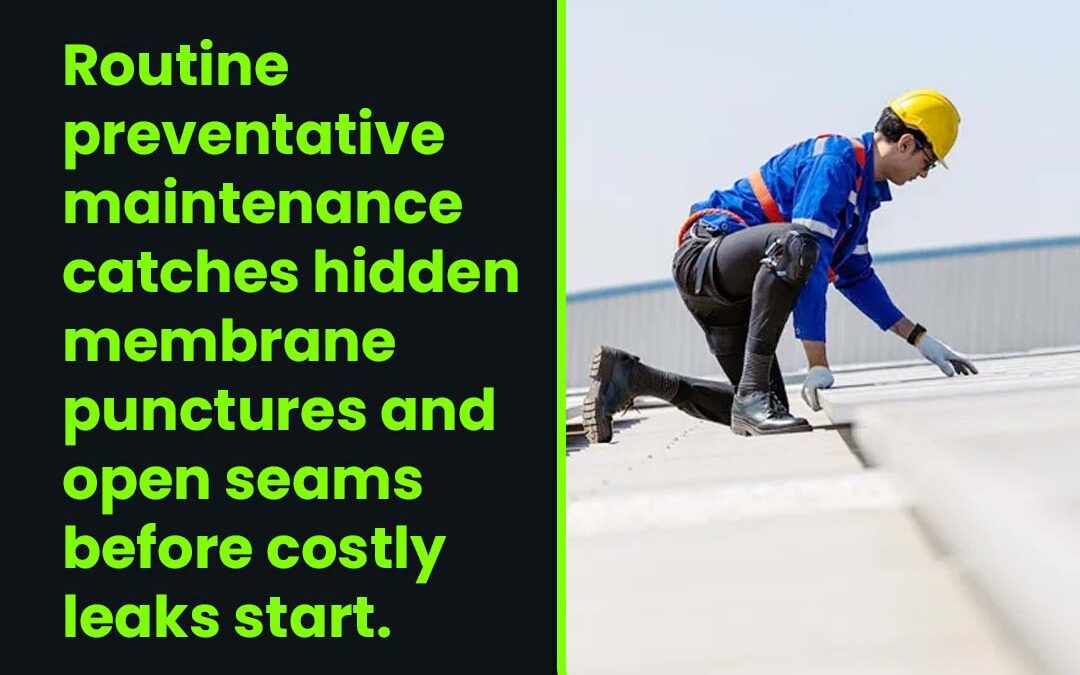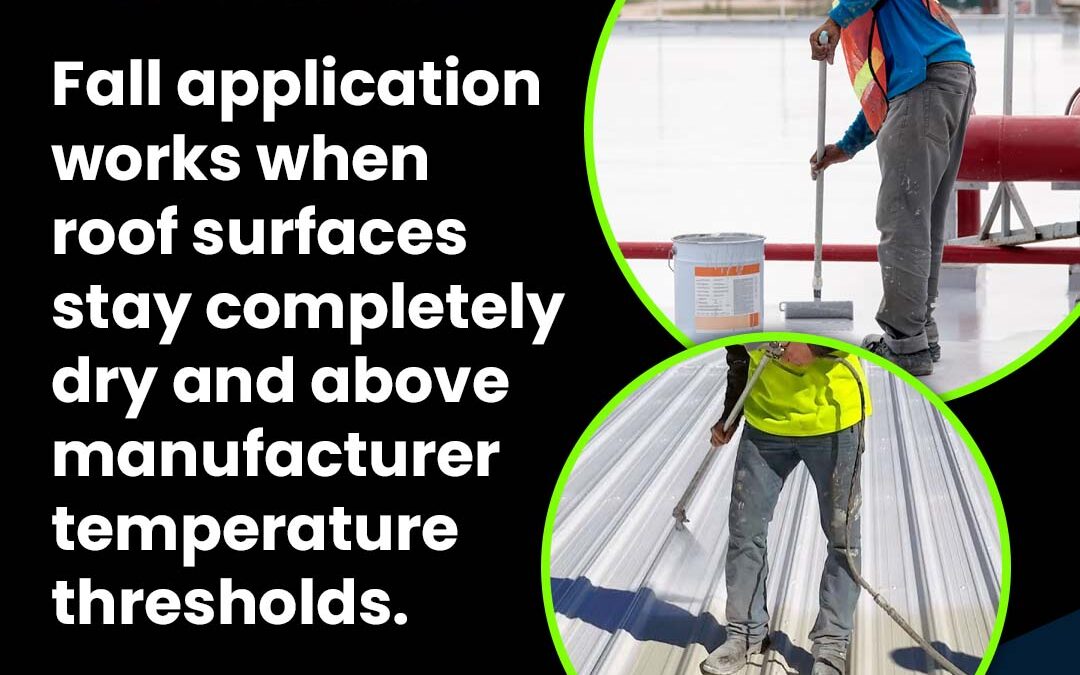

Fort Wayne’s freeze-thaw weather can place added stress on a commercial roof coating when moisture enters cracks, seams, or poorly bonded areas and then freezes. Because these cycles can gradually widen existing defects, Tri-County Commercial Roofing LLC recommends inspecting coated roofs for cracking, peeling, punctures, and drainage problems before and after winter.
What Does Freeze-Thaw Cycling Do to a Roof Coating?
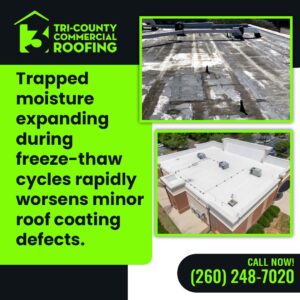
Freeze-thaw cycling repeatedly moves moisture between liquid and frozen states, placing pressure on existing cracks and poorly adhered coating. The coating may remain intact when it is properly installed, but defects beneath or within the system can grow through repeated winter exposure.
Water can collect around seams, drains, rooftop equipment, and low areas. If moisture reaches a break in the coating and freezes, it can place pressure on the surrounding material. Thawing allows more water to enter the same opening. Repeated cycles may contribute to cracking, blistering, peeling, or separation from the roof surface.
The National Weather Service reports that Fort Wayne averages 33.6 inches of snow annually. January daytime highs average 30.4°F, while changing conditions around the freezing point can expose roofs to repeated melting and refreezing.
Which Parts of a Coated Roof Are Most Vulnerable?
Roof areas that hold water or experience movement are more likely to show freeze-thaw damage. These locations deserve closer attention during seasonal inspections.
Common problem areas include:
- Seams and transitions between roofing materials
- Flashing around walls, curbs, and roof edges
- Drains, scuppers, and low spots
- Fasteners and seams on metal roofs
- Areas around vents, pipes, and HVAC equipment
- Previous repairs or coating patches
- High-traffic service paths
A flexible roof coating can accommodate normal roof movement, but it cannot correct loose flashing, saturated insulation, open seams, or a deteriorated roof deck. Those conditions may allow water to travel beneath the coating.
How Can Ponding Water Increase Winter Damage?
Ponding water keeps moisture on the roof longer and creates more opportunities for freezing. Blocked drains, poor slope, settled insulation, or debris can allow water to remain after rain or melting snow.
The repeated presence of water does not mean every coating will fail. Product type, installation quality, roof slope, and the condition of the underlying system all affect performance. However, standing water near damaged coating can enter openings and contribute to further separation.
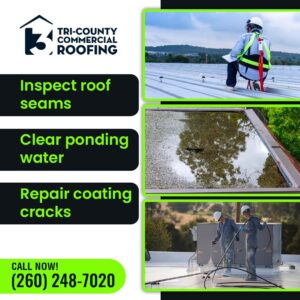
Clearing drains and removing debris can support proper water movement. Persistent ponding may require drainage corrections or repairs to the roof assembly.
When Is Commercial Roof Coating Repair Needed?
Commercial roof coating repair may be needed when an inspection finds cracks, peeling edges, blisters, punctures, exposed seams, or areas where the coating no longer bonds to the roof. The damaged section should be evaluated before another coating layer is added.
Repairs may involve cleaning and drying the area, removing loose material, reinforcing seams, treating rust, patching punctures, or replacing wet materials. Coating over trapped moisture can conceal a larger problem and may lead to further deterioration.
Frequently Asked Questions
Can freeze-thaw cycles damage a new roof coating?
A properly prepared and applied coating is designed to tolerate normal weather exposure. Damage is more likely when moisture reaches weak seams, poorly bonded areas, or defects beneath the coating.
Should a coated commercial roof be inspected after winter?
Yes. A spring inspection can identify changes caused by snow, ice, drainage issues, rooftop traffic, and temperature movement.
Can another coating layer cover freeze-thaw damage?
Not always. Loose coating, wet insulation, open seams, and damaged flashing should be corrected before recoating.
Address Roof Coating Damage Before Winter in Fort Wayne
Small cracks, lifted edges, and drainage problems can worsen once freezing weather arrives. Tri-County Commercial Roofing LLC helps property owners correct these concerns before winter places added stress on the roof. Property owners looking for a roof coating contractor in Fort Wayne, IN, can call us at (260) 248-7020 to schedule an evaluation.