
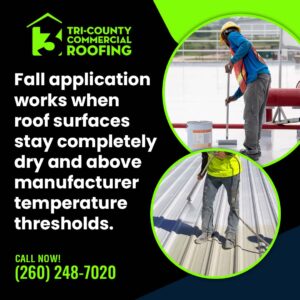
Yes, fall can be a good time to apply a commercial roof coating when the roof is dry and temperatures remain within the product manufacturer’s application range. Tri-County Commercial Roofing LLC evaluates the roof surface, local forecast, moisture conditions, and available curing time because rain, dew, frost, and falling overnight temperatures can limit the working window.
Key Takeaways:
- Check temperatures: Every coating product has application limits.
- Allow curing time: The material may need several dry hours.
- Inspect the roof: Leaks and damaged seams may require repairs first.
- Watch the forecast: Rain, frost, and dew can affect adhesion.
Why Can Fall Be a Suitable Season for Commercial Roof Coating?
Fall may provide manageable temperatures for roof preparation and coating, but the application window becomes narrower as winter approaches. Both daytime and overnight conditions matter.
Extreme summer heat can raise roof-surface temperatures and make working conditions difficult. Cooler fall weather may be better suited for cleaning, repairs, and application. Property owners can also address roof wear before snow, ice, and repeated freezing arrive. The calendar alone does not determine whether work can proceed. A warm afternoon followed by a cold night may not provide enough curing time. Shorter days also reduce workable hours.
What Weather Conditions Affect Roof Coating Application?
Temperature, moisture, rain, frost, humidity, and wind can influence how a coating bonds and cures. Contractors must follow the technical requirements for the selected product.
For example, a BASF technical data sheet for one silicone coating specifies application above 40°F. It also requires surfaces to be clean, dry, and free of frost. Requirements differ among silicone, acrylic, and elastomeric products.
Conditions that may delay a roof coating project include:
- Rain expected before the material cures.
- Moisture from overnight dew
- Frost on the roof surface
- Temperatures near the product’s lower limit
- Strong wind during spray application
- Wet areas remaining after cleaning
What Roof Work May Be Needed Before Coating?
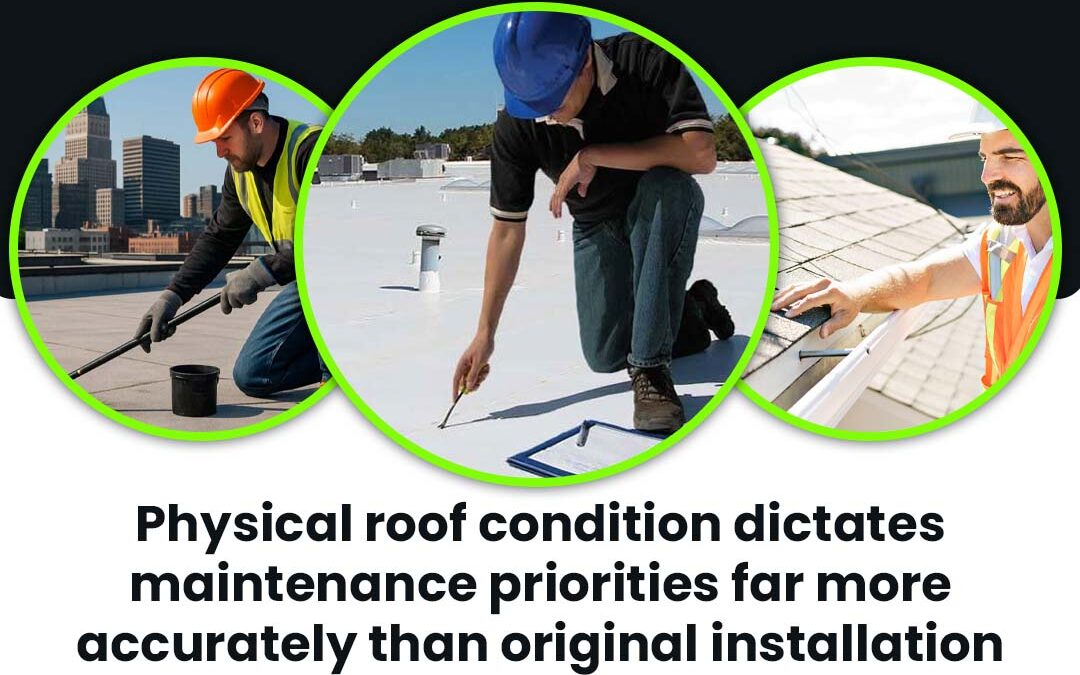
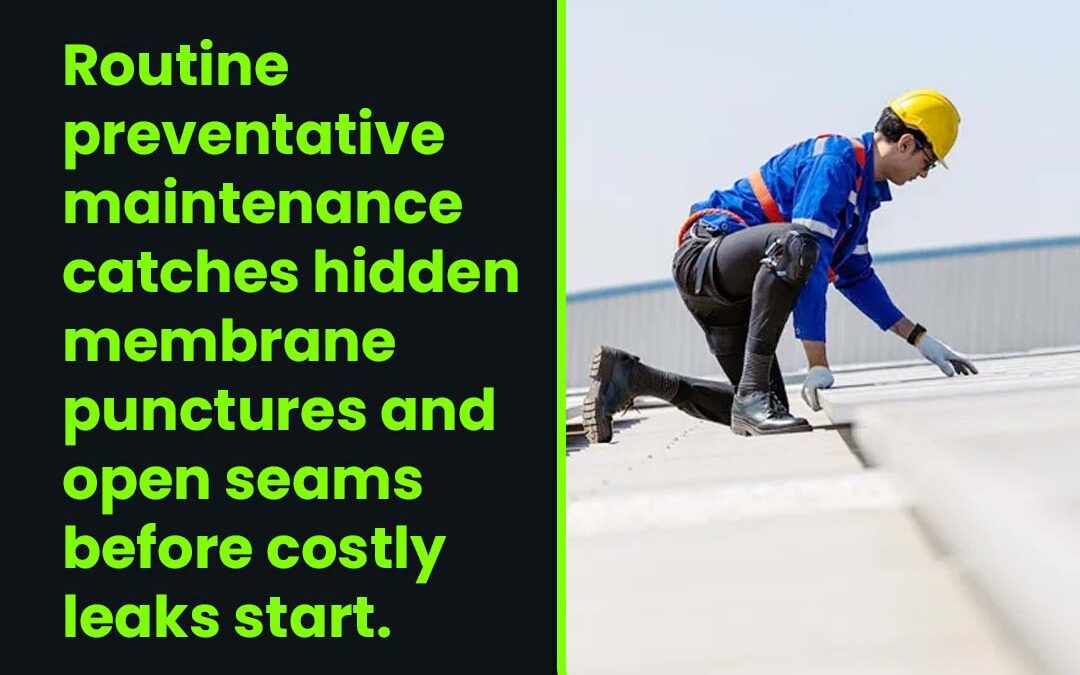
A coating should be applied only after the existing roof has been inspected and prepared. Coating over active leaks, wet insulation, loose material, or damaged seams can conceal problems rather than correct them.
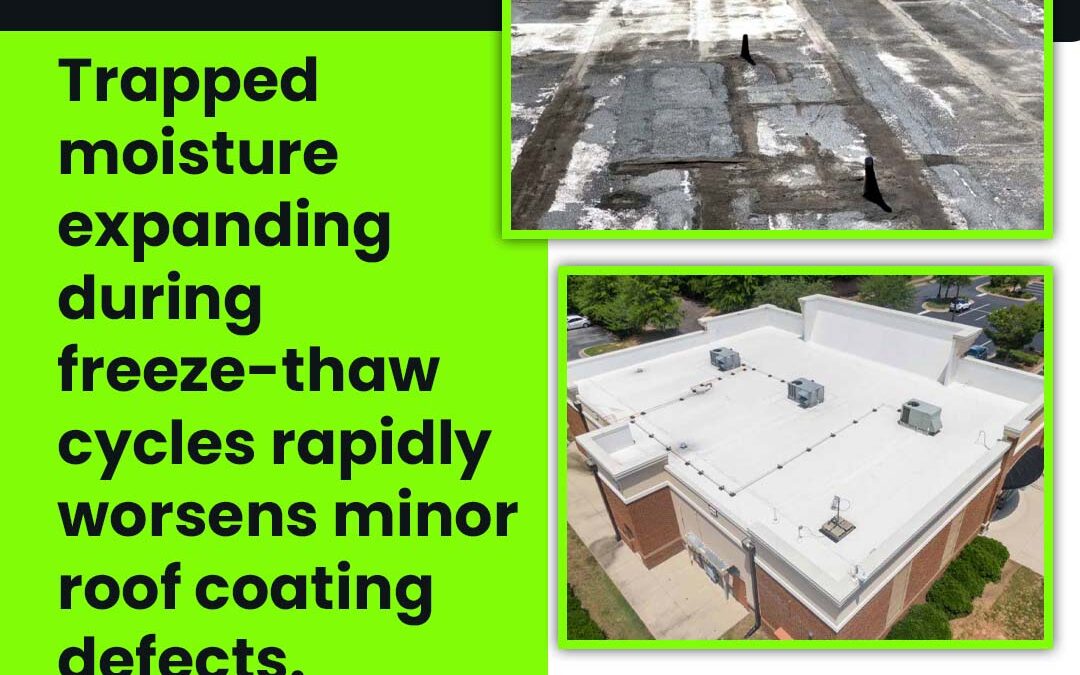
Preparation may include cleaning, rust treatment, seam reinforcement, flashing work, and localized repairs. If an existing coating has cracked, peeled, or separated, commercial roof coating repair may be needed before another layer is applied.
A coating may not be appropriate when the roof deck has widespread deterioration, or the insulation contains extensive moisture. An inspection helps determine whether coating, repair, or replacement is the suitable next step.
How Late in Fall Can a Commercial Roof Be Coated?
Fort Wayne does not have one cutoff date for every coating project. The workable period depends on the material, roof temperature, moisture level, curing requirements, and forecast. Earlier scheduling usually provides more flexibility. Repeated frost and freezing nights can leave too few suitable hours for preparation and curing.
Frequently Asked Questions
Can a roof coating be applied after morning dew?
Application may proceed after the roof dries completely and conditions meet the product requirements. Coating a damp surface can interfere with adhesion.
Will roof coating stop every leak?
No. Open seams, damaged flashing, wet insulation, and deteriorated materials may require repairs before coating.
How long does a roof coating take to cure?
Curing time varies by product, temperature, humidity, and coating thickness. The contractor should follow the manufacturer’s technical instructions.
Discuss Your Roof Coating Needs With a Fort Wayne Contractor
At Tri-County Commercial Roofing LLC, we inspect existing roofs, identify repairs needed before coating, and explain which material may suit the building. If you need a roof coating contractor in Fort Wayne, IN, call us at (260) 248-7020 to request an inspection.