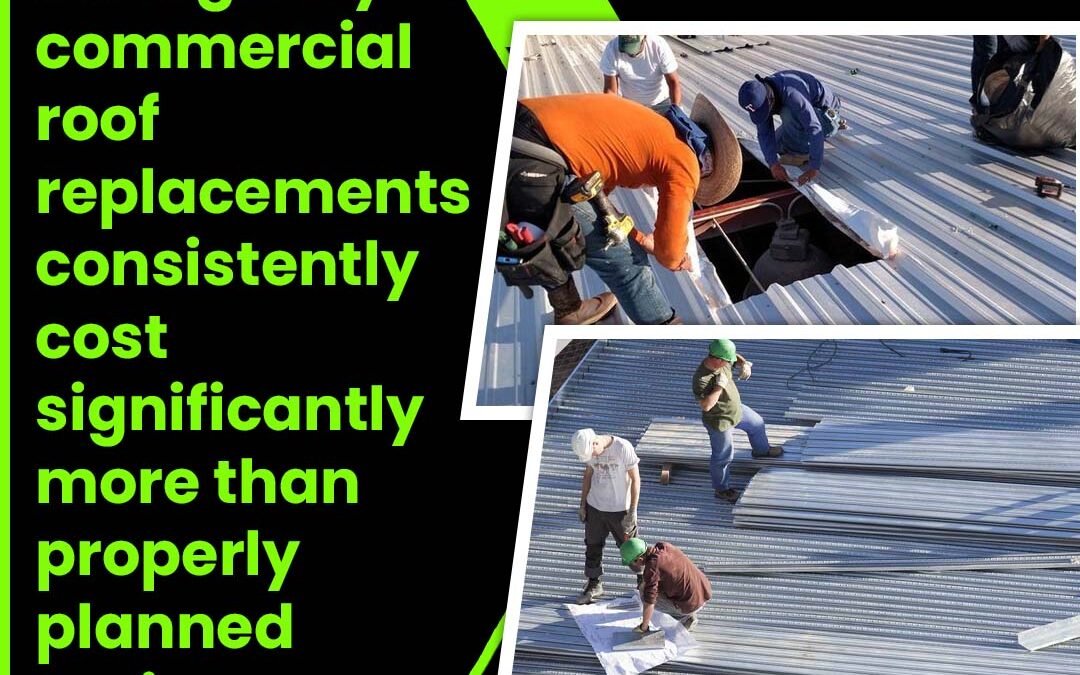

A commercial roof in the Midwest faces weather conditions that few other regions match. Northern Indiana delivers scorching summers, brutal winters, heavy snow accumulation, and a persistent freeze-thaw cycle that puts every commercial roofing system through sustained stress year after year. For property owners in Fort Wayne and surrounding areas, knowing how long a roof should last and what controls that lifespan is the difference between planned capital decisions and costly emergency responses.
Tri-County Commercial Roofing LLC has worked exclusively with commercial properties across northern Indiana since 2014, giving building owners straightforward answers backed by hands-on field experience. Most commercial roofs last between 15 and 30 years. Real-world longevity depends on four core variables: material selection, installation quality, climate exposure, and maintenance consistency. Whether you manage a warehouse or a manufacturing facility, understanding how these factors connect helps you protect your property and plan ahead rather than react after damage has already taken hold.
Roofing System Types and Their Expected Service Lives
The material your roof is made of sets the baseline for how long it can perform. That baseline holds only when the system is installed correctly and maintained throughout its life.
Here is a direct comparison of the most common commercial roofing systems and their expected service ranges:
| Roofing System | Expected Lifespan |
| TPO (Thermoplastic Polyolefin, a single-ply reflective membrane) | 15–25 years |
| EPDM (Ethylene Propylene Diene Monomer, a synthetic rubber membrane) | 15–35 years |
| PVC (Polyvinyl Chloride, a heat-welded single-ply system) | 20–30 years |
| Metal Roofing (corrugated steel, aluminum, or standing seam) | 30–45 years |
| BUR (Built-Up Roofing, alternating layers of bitumen and reinforcing fabric) | 20–30 years |
| Modified Bitumen (an asphalt-based system with added performance modifiers) | 20+ years |
A roof installed outside manufacturer specifications, or one that goes multiple years without a professional inspection, can fall well short of these ranges regardless of material quality.
Selecting the right system depends on building type, roof slope, anticipated foot traffic, and operational requirements. A certified commercial roofing contractor evaluates all of these before recommending a system that fits both the property and the demands of the Midwest climate.
What the Midwest Climate Does to Commercial Roofing Systems
Northern Indiana is one of the more demanding environments for commercial roofing in the country. Properties in Fort Wayne and the surrounding region face a combination of seasonal stressors that compound wear in ways that warmer or more consistent climates do not.
Freeze-Thaw Cycle
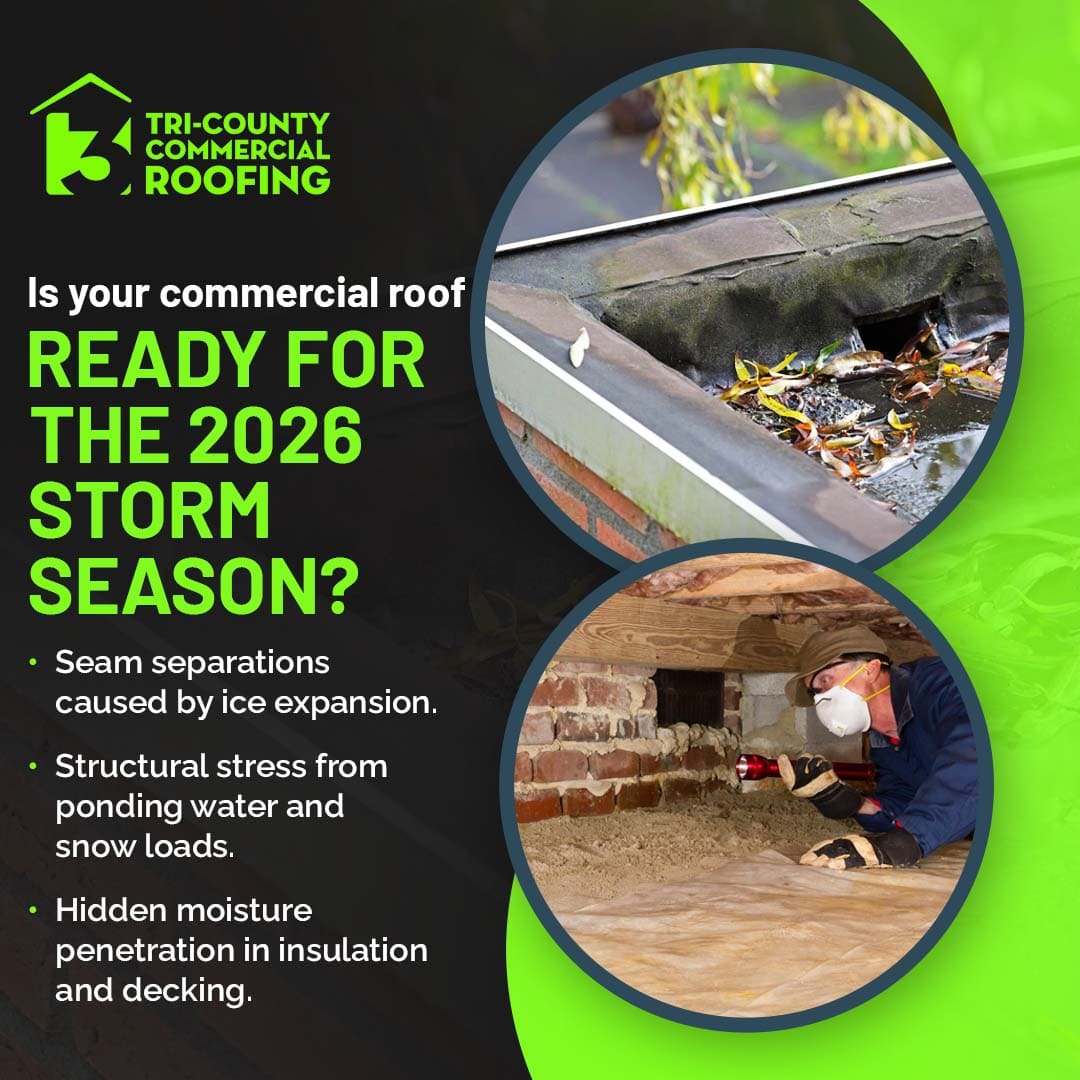
The freeze-thaw cycle is the most damaging recurring factor for flat and low-slope commercial roofing systems in northern Indiana.
Water infiltrates a small crack or seam in the roof membrane. When temperatures drop below 32°F, that water freezes and expands, forcing the gap wider. Once temperatures rise, the ice melts and leaves behind a wider opening that takes in more water than before. When it refreezes, the damage compounds further. A minor seam issue left through a full winter can work its way into a structural problem.
This process does not produce obvious overnight damage. It works gradually, weakening the roofing system day after day until one heavy spring rain or final thaw exposes months of accumulated deterioration.
Older membranes carry a greater risk. A newer membrane is elastic enough to flex through temperature swings without damage. An aged membrane near the end of its intended service life loses that flexibility. Thermal stress that a newer system handles without issue can split or tear an older one.
Ponding Water on Flat Roofs
Ponding water, defined as water that remains on a roof surface for more than 48 hours after rainfall, shortens commercial roof service life faster than most property owners expect.
Most commercial buildings in Fort Wayne use flat or low-slope roofing systems. These designs rely entirely on drains, scuppers, and intentional slope to move water off the surface. When any part of that drainage system is blocked, or when the roof develops low spots from settling, water accumulates and sits.
Standing water accelerates membrane wear, saturates insulation (reducing its thermal resistance), and creates entry points for moisture into the structural layers beneath. During northern Indiana winters, that same water freezes, adding dead weight to the structure while concentrating freeze-thaw stress in one location.
Three common causes of ponding water on commercial roofs:
- Debris blocking internal drains or scuppers.
- Roof settlement creating low spots over time.
- Drainage systems that were undersized or improperly designed at installation.
Snow Load and Structural Stress
Heavy snow accumulation places structural weight on flat roof systems that, when combined with pre-existing weaknesses, can push a roofing system toward failure.
Northern Indiana winters regularly produce heavy, wet snow across large roof surfaces. Roofs with soft spots, saturated insulation, or compromised decking carry the highest risk under these conditions. When snow is followed by rain and then a hard freeze, the combined load on an already-weakened system compounds the risk of structural damage.
Why Installation Quality Determines Long-Term Roof Performance
Poor workmanship is one of the leading causes of premature roofing failure, regardless of the materials used.
A property owner can select a premium EPDM or metal system and still see early failure when installation is not executed to the manufacturer’s standards. The most vulnerable areas are seams, transitions, and penetrations where the membrane must connect to a different surface or material.
For example, TPO seams that are improperly adhered to a flat roof may appear intact at installation but lift under freeze-thaw stress within a season or two. Once a seam lifts, wind and water intrusion affect the entire section, and the damaged area grows with each weather event.
Factory-trained, certified installation addresses both of these failure points. When a system is installed according to the manufacturer’s specifications, the warranty is protected, and the long-term risk of failure is reduced. For owners of warehouses, manufacturing facilities, or multi-tenant buildings, that precision is what separates a roof that reaches its full service life from one that requires major intervention years ahead of schedule.
Preventative Maintenance for Extending Roof Life
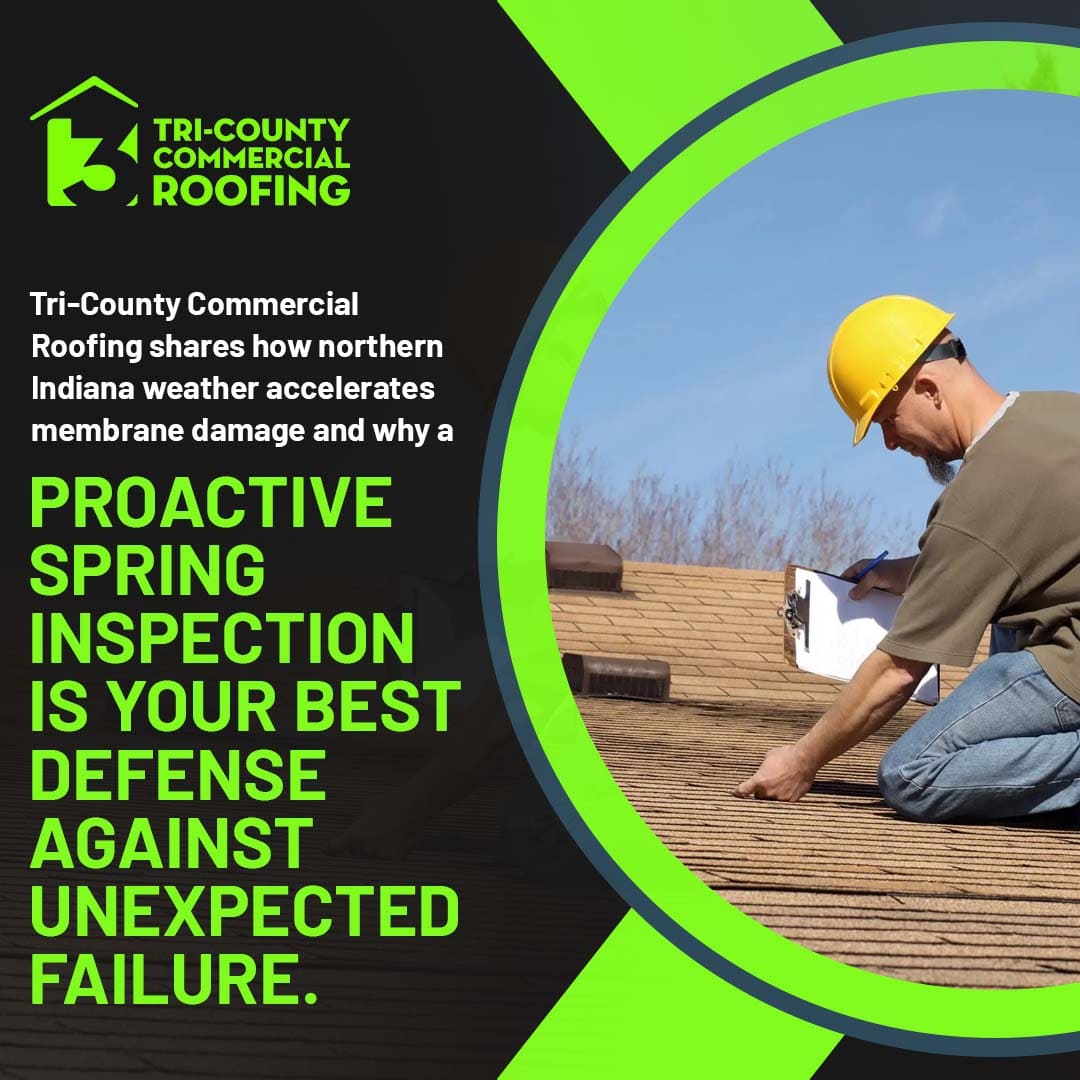
A disciplined maintenance program is one of the most direct ways to extend the service life of a commercial roofing system. A roof that would otherwise reach 20 years of service can potentially reach 30 with consistent inspections and timely commercial roof repair. Staying ahead of maintenance is the most reliable way to push back the timeline for commercial roof replacement.
Minor problems grow into major ones quickly in a Midwest climate. A seam separation or blocked drain that goes unaddressed through winter does not stay minor. It develops into moisture intrusion, insulation damage, and structural deterioration that requires substantially more intervention than early action would have.
Maintenance Schedule for Midwest Commercial Properties
A practical maintenance routine for commercial roofs in the Fort Wayne region includes the following:
- Spring inspection: Identify and address any damage caused by winter freeze-thaw cycles before it worsens under spring rain and rising temperatures.
- Fall inspection: Prepare the system for the upcoming freeze season, clear all drains, and address seam or membrane concerns before the first hard freeze.
- Post-storm checks: After significant hail events, high winds, or heavy snow accumulation, an additional inspection identifies damage that may not be visible from the ground.
- Drainage clearing: Before and during winter to prevent ice dam formation along roof edges and at drain openings.
This schedule applies to all roof ages and system types. The frequency of inspections may increase for older systems or buildings with a history of drainage or seam issues.
Warning Signs That a Commercial Roof Is Near the End of Its Life
A commercial roof rarely fails without warning. Recognizing early indicators allows property owners to schedule repairs before the situation requires a full replacement.
Watch for the following:
- Membrane bubbling or blistering: Moisture trapped beneath the roof surface is pushing up from below, indicating sub-surface saturation.
- Lifted or separated seams: The membrane is failing at joints, which are the most common water entry points on flat and low-slope roofs.
- Soft spots underfoot: Saturated insulation no longer holds structural support and signals that water has worked its way deep below the surface.
- Interior water stains: Moisture has already passed through the roofing system and into the building’s interior.
- Recurring leaks after repairs: Repeated failures in the same area typically indicate the underlying system is at the end of its service life.
- Roof age approaching 20 years: A formal condition assessment by a commercial roofing contractor is appropriate at this stage, regardless of visible symptoms.
Multiple signs appearing together typically point toward commercial roof replacement rather than continued repair work.
Commercial Roof Repair vs. Replacement: Making the Right Call
The decision between commercial roof repair and replacement depends on roof age, the scope of damage, and the long-term condition of the system.
When Targeted Repair Makes Sense
Repair is typically the right call in the following situations:
- A roof under 15 years old with isolated membrane damage from a storm, where the surrounding material is in sound condition.
- Localized seam failure with no widespread moisture detected in the insulation layer beneath.
- Flashing failure at a single penetration point with no evidence of sub-surface saturation in adjacent areas.
When Replacement Is the Stronger Choice
Commercial roof replacement becomes the better long-term decision when:
- A roof over 20 years old shows widespread seam separation, multiple soft spots, and a history of recurring leaks.
- Core sampling, which involves taking circular incisions into the roofing layers to inspect materials below the surface, reveals widespread insulation saturation.
- Structural deck damage must be addressed before any new membrane system can be installed.
A qualified commercial roofing contractor uses core cuts and direct observation to assess the actual condition of the system. That process removes guesswork and gives property owners factual information to work from.
Tri-County Commercial Roofing: Built for the Demands of Midwest Commercial Properties
Extending a commercial roof’s service life takes consistent attention and a contractor who treats every inspection and repair with the same level of accountability they bring to a full installation. That standard is what Tri-County Commercial Roofing has operated by since 2014.
We work exclusively with commercial properties across northern Indiana, handling everything from professional inspections and commercial roof repair to full roof replacement. That exclusive focus means every crew member, every assessment, and every recommendation is grounded in commercial roofing experience, not adapted from residential work.
Certified to Install. Trained to Protect Your Investment.
We are led by Merle Bontrager, a factory-trained and certified installer of commercial roofing systems. Every system installed by Tri-County Commercial Roofing meets manufacturer specifications, protecting the warranty and establishing the seam and flashing integrity that determines long-term performance.
Proactive Inspections That Add Years to Roof Life
Tri-County Commercial Roofing works with property owners to stay ahead of the issues that shorten roof life. Our professional inspections evaluate drainage, membrane condition, and seam performance across the full roof surface. When we identify a problem early, a targeted repair protects the system. When a system has reached the end of its service life, we provide a clear, honest replacement assessment that gives you the information you need to plan.
A Straightforward Process From Inspection to Completion
Every project we take on starts with a written scope of work. We schedule around your building’s active operations to keep disruption to a minimum. Every recommendation we make comes with a direct explanation grounded in what we observed on the roof, not a sales pitch.
Schedule a Professional Roof Assessment in Fort Wayne
Commercial roofing in Fort Wayne, IN, and across northern Indiana requires a contractor who understands what this climate does to flat and low-slope systems over time. Freeze-thaw cycles, snow loads, ponding water, and sustained thermal stress are not occasional concerns. They are the consistent forces that determine whether a roof reaches 30 years of service or fails a decade short of that.
If your roof is aging, showing any of the warning signs above, or has not had a professional inspection in the past year, a direct assessment is the right starting point. Contact Tri-County Commercial Roofing at (260) 248-7020 to schedule your inspection. We serve Fort Wayne and commercial properties throughout northern Indiana and the surrounding Midwest.