
A commercial roof replacement budget should include tear-off and disposal, deck repairs, insulation, the roofing system itself, flashing, labor, and permits. Pricing in Fort Wayne, IN varies widely depending on material, building size, and deck condition. Tri-County Commercial Roofing LLC walks every roof and pulls core samples before quoting, so these variables show up in the estimate instead of as a surprise mid-project.
What Types of Commercial Roofs Are Common in Fort Wayne, IN?
Commercial buildings generally use one of three broad roof categories: single-ply membranes like TPO, EPDM, and PVC; built-up or modified bitumen systems; and metal panel roofing. Flat and low-slope buildings, like warehouses and manufacturing facilities, typically use membrane or built-up systems. Buildings with sloped sections, or agricultural and industrial structures, often use standing seam metal instead.
Each category behaves differently under Indiana’s weather swings. Membranes handle thermal movement well. Built-up systems offer strong puncture resistance for buildings with regular rooftop foot traffic. Metal holds up longest against wind and snow load but costs more upfront.
What Line Items Belong in the Budget?
Seven categories make up a full budget: tear-off, deck repair, insulation, the system itself, flashing, labor, and permitting.
Tear-Off and Disposal
Most cities require contractors to remove old roofing before installing new material. This step adds to the overall project cost, and the amount grows with each extra layer of old material still on the building.
Deck Repair
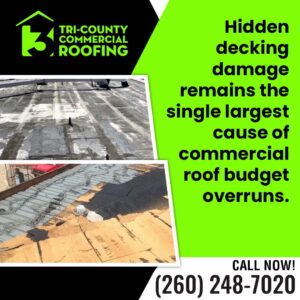
Once the old roof comes off, the deck gets inspected. Moisture damage often means sections need replacing before work continues, which adds a noticeable line item for affected areas. Skipping this step is how a five-year-old roof starts leaking.
Labor
Skilled roofing labor is in short supply nationwide, and demand for qualified crews continues to outpace the number of workers entering the trade. That gap keeps labor pricing firm across the industry, regardless of which roof system is going on. This matters when comparing bids for commercial roof repair versus full replacement, since labor is often the deciding factor in which option makes financial sense.
Cost Comparison by Roofing System
Lifespan estimates are approximate and vary based on installation quality, maintenance history, climate exposure, and manufacturer specifications. Cost tiers are relative and depend on building size, region, and project scope. A commercial roofing contractor in Fort Wayne, IN should assess your specific building before relying on these figures for planning purposes.
How Should a Business Owner Plan for Unexpected Costs?
Build a contingency into any budget rather than assuming the initial quote is final. Deck damage isn’t always visible until tear-off starts, and that’s the biggest reason projects run over their original estimate. A qualified commercial roofing contractor should walk you through this possibility before you sign anything, not after.
Choosing a contractor for commercial roofing work is about more than the lowest number on a bid sheet. It’s about finding a team that itemizes every line so nothing gets buried until the invoice arrives.
Need Commercial Roof Repair or a Full Replacement Quote?
Contact Tri-County Commercial Roofing at (260) 248-7020 for a roof assessment and a straightforward breakdown of what your commercial roof replacement in Fort Wayne, IN actually needs.

Frequently Asked Questions
Does insurance typically cover commercial roof replacement?
It depends on the cause. Storm or wind damage is often covered. Age-related wear typically is not. Check your policy before assuming either way.
How long does a commercial roof replacement take?
Most 10,000 square foot projects take one to three weeks, depending on system type, weather, and whether the building stays occupied during work.
Can a new roof go over the existing one?
Sometimes. If the current roof has one layer and the deck is sound, an overlay can reduce total project cost versus full tear-off. Most codes cap installations at two layers.