
A commercial roof does not always fail all at once. In many cases, a single section of a coating membrane develops a crack, a seam separates near a penetration, or a blister opens at a drainage point. For property owners managing warehouses, manufacturing facilities, or multi-tenant buildings in Fort Wayne, IN, the immediate question is straightforward: Does this roof need a targeted commercial roof coating repair, or is a larger scope of work required? The answer is not always obvious from ground level, and making the wrong call in either direction carries real consequences for the building and the operation inside it.
Tri-County Commercial Roofing LLC has worked with commercial property owners across the region to answer exactly that question. As a commercial-only roofing contractor and certified installer of commercial roofing systems, our team brings field-tested knowledge to every roof assessment. Whether the right solution is a targeted roof coating repair, a full recoat of the existing membrane, or a more involved restoration, the scope of work is always determined by what the roof’s current condition actually supports, not by what is simplest to propose.
Understanding Commercial Roof Coating Systems
What a Roof Coating Does
A roof coating refers to a fluid material applied directly over an existing roof surface, forming a seamless, waterproof membrane once cured.The waterproof layer seals seams, fills minor surface voids, and blocks moisture from entering the roof assembly below.
Coatings are restoration systems. They are applied to flat or low-slope roofs that remain structurally sound but show early-stage surface wear, minor membrane deterioration, or limited water intrusion.
There are specific things a coating does not do:
- It does not substitute for structural repair.
- It does not restore a failing membrane.
- It does not remove the need for scheduled maintenance after application.
When applied to a qualifying roof, a properly installed coating system can extend service life by a decade or more, depending on coating type, substrate condition, and ongoing maintenance.
How Roof Coating Repair Works
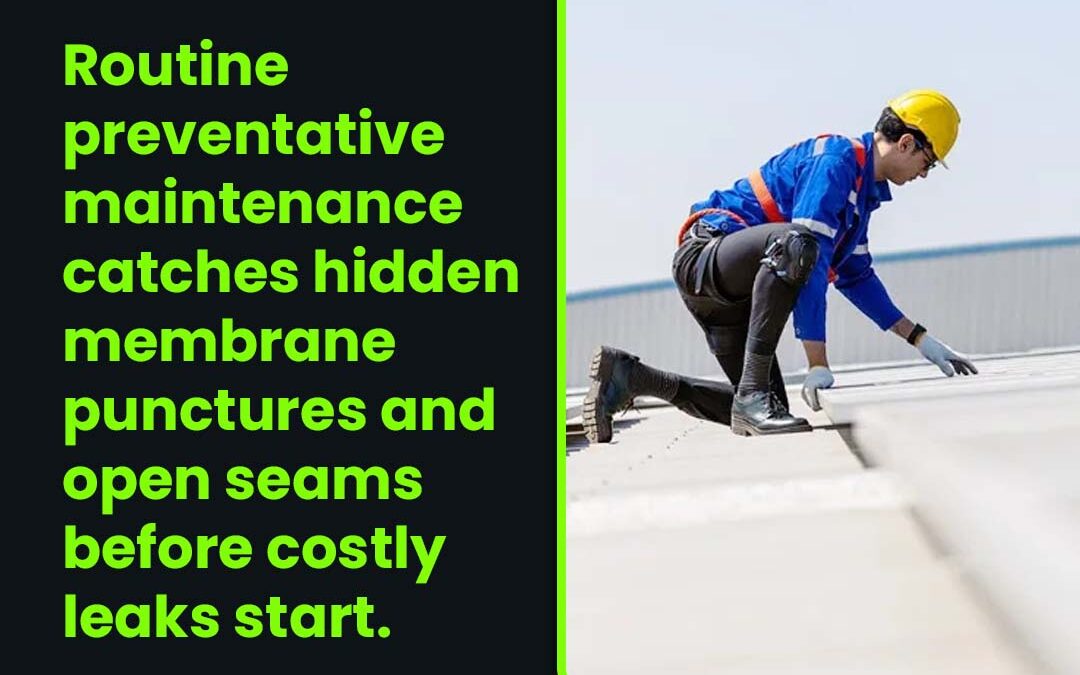
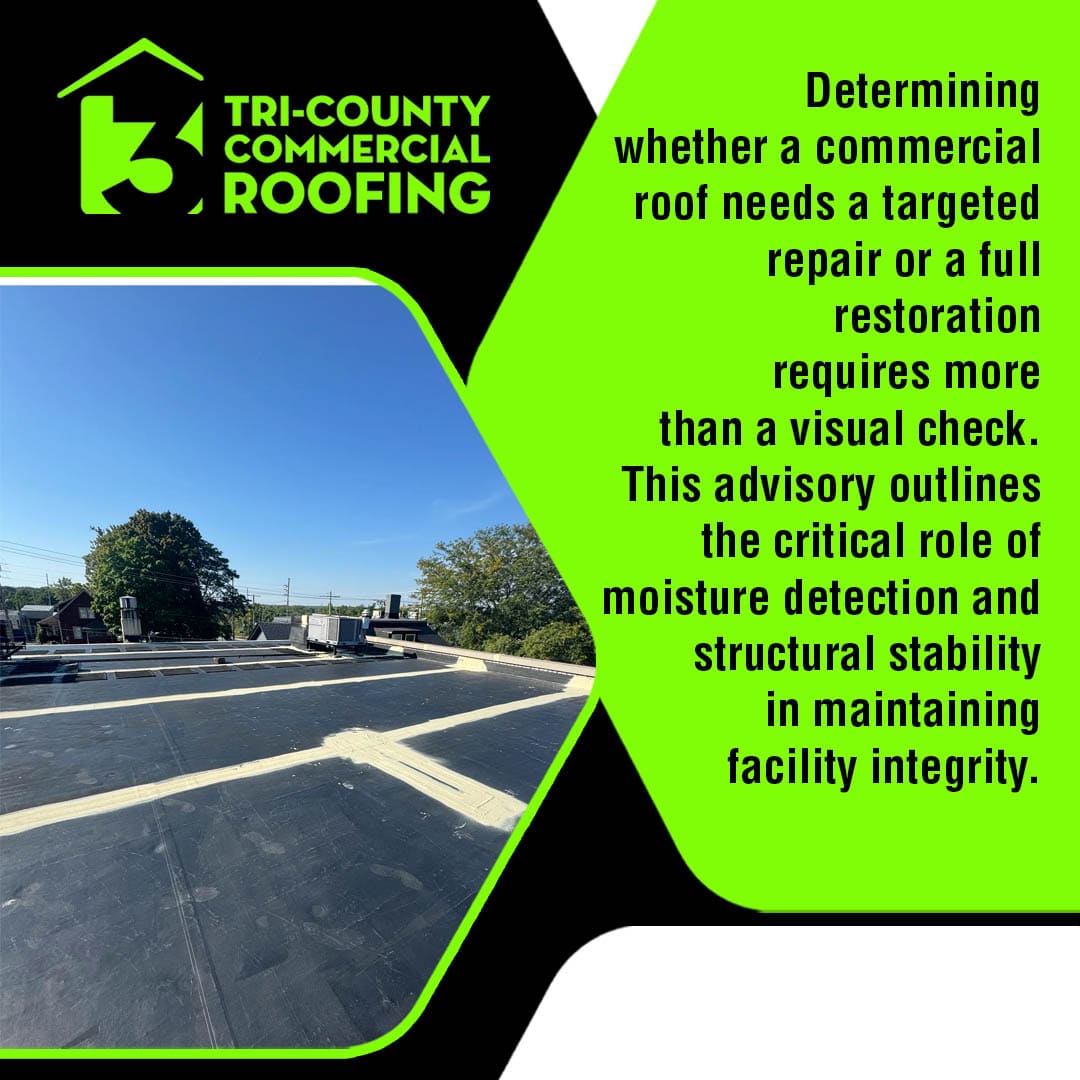
Roof coating repair is a targeted correction to an isolated section of an existing coating membrane. The affected area, whether a crack at a seam, an open blister, or a small area of delamination near a drain or penetration, is cleaned, prepared, and patched using materials compatible with the existing system. The repaired section bonds back into the surrounding membrane. Waterproofing continuity is restored at the specific failure point without disturbing the rest of the performing roof surface.
This is a practical advantage of liquid-applied systems. Unlike single-ply membrane sheets, which require full-section replacement when one section fails, a coating membrane can be repaired directly at the failure point.
For warehouse operators, facility managers, and property owners in Fort Wayne, IN, commercial roof coating repair at an isolated failure point preserves the integrity of the broader roof system without expanding the project beyond what the condition requires.
When Targeted Repair Is the Right Call
Failure Is Isolated to a Defined Area
When cracking, blistering, or seam separation affects a small, clearly defined section of the roof, targeted repair is a viable scope of work. A qualified roof coating contractor evaluates whether the failure has spread laterally beneath the surface or remains localized at its point of origin.
For example, a small blister that has opened near a rooftop drain can be addressed with a compatible patch material, returning that section of the membrane to full waterproofing performance.
Substrate Below Is Dry
This condition is non-negotiable before any repair work begins. Repair materials applied over a wet or saturated substrate will not bond correctly and will fail again, often faster than the original failure.
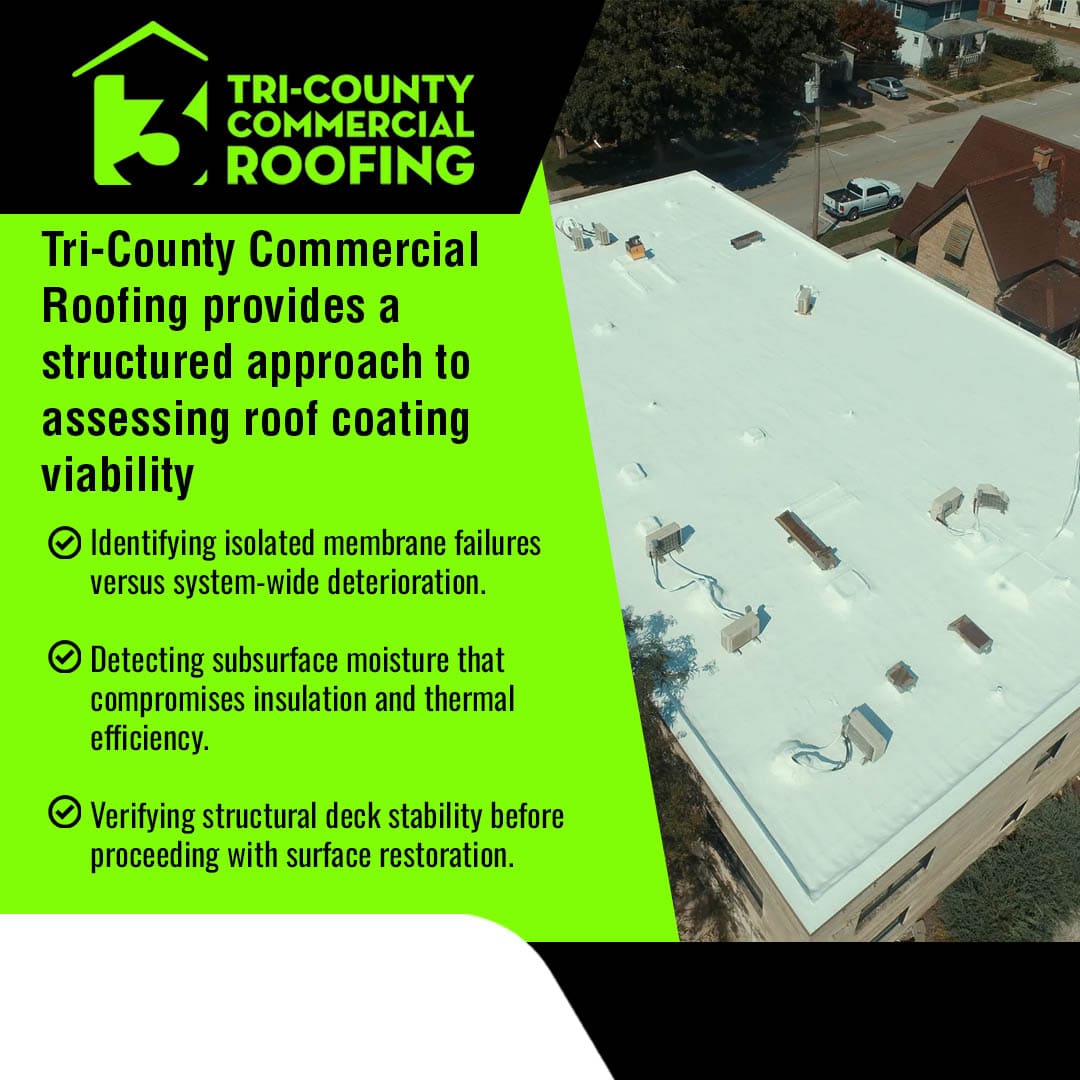
A moisture survey confirms whether the substrate qualifies for repair. This non-destructive scanning process detects trapped water in the roof assembly without requiring physical core cuts. If the substrate is dry, repair proceeds. If moisture is present beneath the surface, the scope must be adjusted before coating work begins.
Existing Coating Has Remaining Service Life
Repair extends the performance of a functioning system. It does not extend the life of a system that has already run its course.
A certified roof coating contractor assesses whether the existing membrane still has useful service life or whether the system as a whole warrants a full recoat. If the coating is adhered, intact across the majority of the roof surface, and not approaching the end of its rated service period, targeted repair is the correct path forward.
When a Broader Scope Becomes Necessary
Widespread Membrane Deterioration
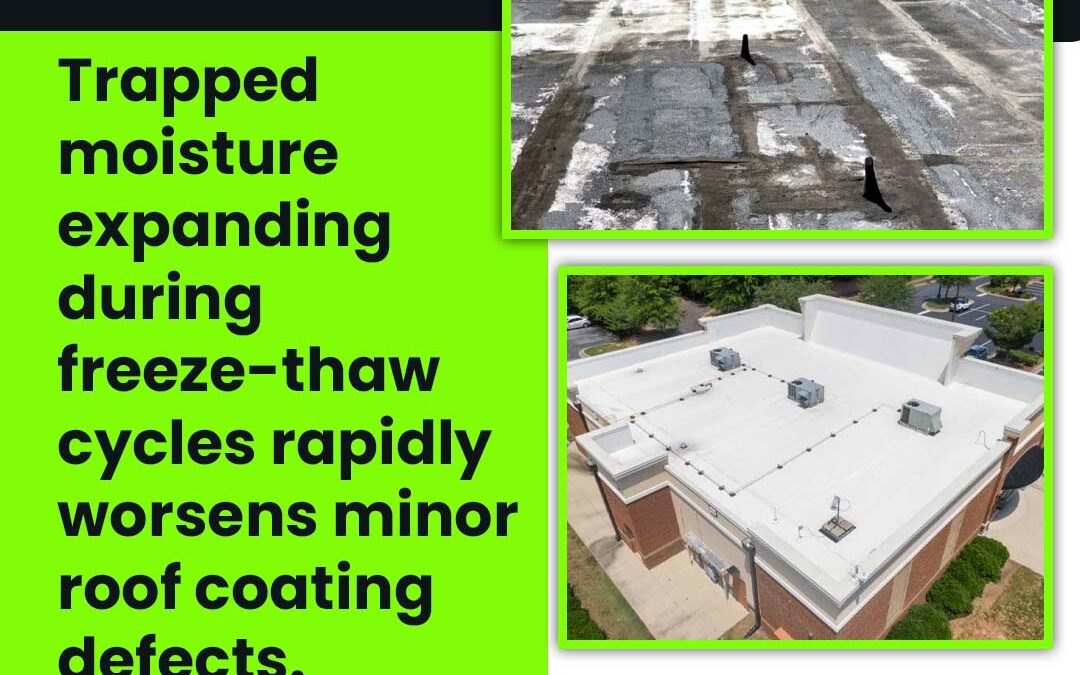
When cracking, blistering, or delamination appears across multiple sections of the roof surface, the problem is no longer isolated. A pattern of failure distributed across the membrane indicates that targeted repairs will not produce a durable result.
A commercial building with coating failures at the north parapet, south drainage field, and two separate HVAC penetrations is not a repair candidate at those individual points. That distribution of failure signals the coating system as a whole has reached a condition where full recoating is the appropriate next step.
Saturated Insulation Beneath the Membrane
Water that enters a commercial roof assembly does not stay at its entry point. It moves laterally through insulation boards and along metal decking, often showing up as a ceiling stain far from the actual source.
Wet insulation loses thermal resistance as moisture replaces the air pockets that give insulation its R-value. Depending on the insulation type, that thermal performance may not fully recover after drying. Saturated insulation must be removed and replaced before any new coating is applied. Coating over wet insulation leads to premature system failure and voids manufacturer warranties.
A manufacturing facility with a seam failure deferred for several months may reveal wet insulation across a broad section of the roof, even when the visible membrane failure appears limited in size.
Structural Deck Damage
A roof coating is a surface system. It relies entirely on a structurally sound substrate. If the roof deck has corroded, deflected, or deteriorated from prolonged moisture exposure, the deck requires repair or replacement before any surface system is applied.
No coating product, regardless of application precision, can compensate for a compromised structural layer beneath it. Deck condition is evaluated as part of any thorough professional roof assessment.
End-of-Life Membrane Failure
When an existing membrane shows split seams across multiple locations, broad adhesion loss, or a deterioration pattern consistent with a system that has reached the end of its rated life, replacement is the appropriate recommendation. Repair at this stage produces short-term results that do not resolve the underlying condition.
What a Professional Roof Assessment Covers
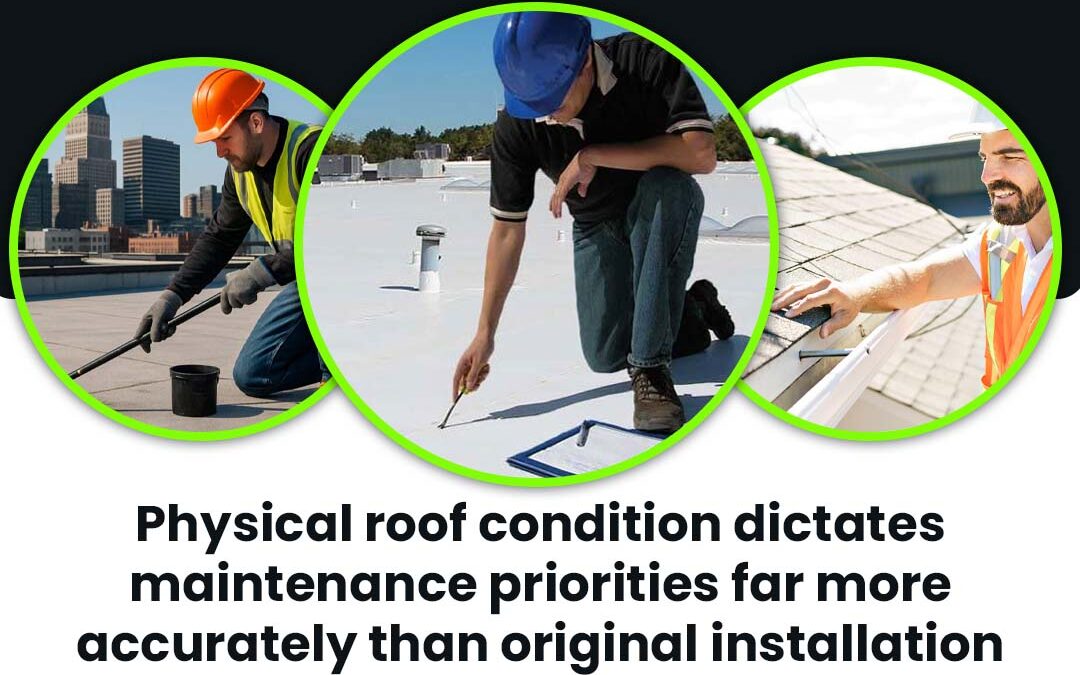
The difference between a repair candidate and a recoating or replacement candidate is not visible from ground level. It requires an on-site evaluation by a certified installer.
A professional roof assessment covers four areas:
- Visual inspection of the membrane surface for blistering, cracking, seam separation, and ponding water patterns. Ponding water refers to water that remains on a flat roof surface for 48 hours or more after rainfall and accelerates membrane deterioration when left unresolved.
- Substrate moisture verification using non-destructive scanning to identify trapped water in the insulation layer before any work begins.
- Drainage evaluation at low points, interior drains, and scuppers, where standing water concentrates and causes accelerated wear on the membrane surface.
- Penetration and flashing review at HVAC curbs, skylights, pipe boots, and roof edges, where most commercial roof leaks originate.
Without this assessment, any recommendation for commercial roof coating repair, recoat, or replacement is based on incomplete information. A reliable scope of work follows the assessment, not the other way around.
Coating Materials and Installation Standards
Coating Types Used in Repair Applications
Product compatibility with the existing roof system is non-negotiable. Coating materials are not interchangeable across all substrates and conditions.
- Silicone coatings resist ponding water without degrading over time. They are used on flat roofs with drainage limitations and provide strong UV resistance.
- Acrylic coatings are water-based and reduce heat absorption at the roof surface. They perform well on metal roofs and single-ply membranes with consistent sun exposure.
- Elastomeric coatings are flexible membranes that expand and contract with temperature changes. Indiana’s climate, with cold winters and warm, humid summers, creates significant thermal movement in roof assemblies. Elastomeric systems are designed to handle that movement without cracking or separating.
- Polyurethane coatings provide impact resistance and are appropriate for roofs with moderate foot traffic from maintenance or mechanical service personnel.
Using an incompatible coating product in a repair application, regardless of how well it is applied, will result in premature failure and may void the warranty on the existing coating system.
Why Certified Installation Affects Repair Durability
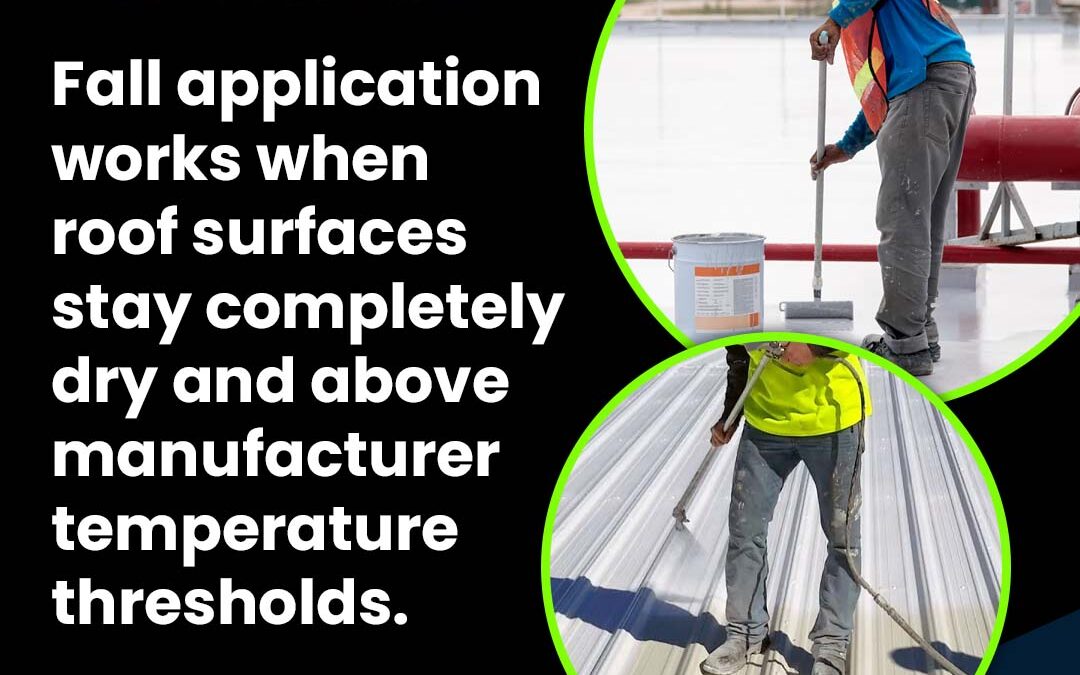
Certified installation is what determines whether a coating repair holds long-term. Installers who follow manufacturer specifications for surface preparation, moisture verification, product selection, application thickness, and cure time produce results that perform as designed and keep the existing warranty intact.
A contractor without factory training may apply the correct product but miss a preparation step that compromises the bond. In that case, the repair fails not because of the material but because of the process. For commercial property owners, that distinction matters because a failed repair does not just mean redoing the work. It means the window for a straightforward fix may have closed, and the scope of work required has grown.
What to Expect From Tri-County Commercial Roofing
Assessment and Repair Process
At Tri-County Commercial Roofing, our installers are factory-trained and certified in commercial roofing systems. Every project starts with an honest, on-site evaluation, and the scope of work is determined by what the roof actually requires, not by what is simplest to propose. That standard of certified, precise workmanship carries through from the initial substrate assessment to the final walkthrough.
We work exclusively in commercial roofing, with no residential projects dividing our focus or our resources. We serve commercial property owners in Fort Wayne, IN, and nearby areas, including warehouses, manufacturing facilities, agricultural buildings, multi-tenant commercial properties, and institutional buildings.
Experience Across Commercial Property Types
Tri-County Commercial Roofing has served commercial property owners across the Fort Wayne, IN region since 2014. We hold the Preferred Contractor designation, a distinction earned through consistent adherence to manufacturer installation standards across multiple years. That credential reflects the technical requirements we meet on every project, not just select ones.
The property types Tri-County Commercial Roofing works with range from manufacturing facilities and warehouses to distribution centers, agricultural buildings, multi-tenant commercial properties, and churches. Each presents different roofing conditions, operational requirements, and risk considerations. A warehouse with heavy rooftop equipment creates different wear patterns than a multi-tenant retail strip center. A church with a large flat roof assembly has different scheduling constraints than a distribution center that operates around the clock. Our commercial-only focus means we bring relevant, field-tested experience to each of those situations.
Questions to Ask Before Any Coating Work Begins
Before agreeing to any scope of work, a property owner should have direct answers to these questions from their roof coating contractor:
- Has a moisture survey confirmed that the substrate is dry beneath the affected area?
- Are the repair materials compatible with the existing commercial roof coating system?
- Does the proposed scope address the source of the failure, not just the visible symptom?
- Will the repair preserve the existing manufacturer’s warranty?
- What conditions would change the recommendation from repair to recoat or replacement?
A contractor who cannot answer these questions directly is not in a position to make a recommendation that holds up over time.
Schedule a Roof Assessment in Fort Wayne, IN
If your commercial roof shows visible coating failures or you have noticed water intrusion after recent weather, an on-site evaluation by a certified installer is the appropriate next step.
Tri-County Commercial Roofing provides honest, field-based roof assessments for commercial property owners in Fort Wayne, IN, and the surrounding region. If your commercial roof coating is showing signs of wear or failure, call us at (260) 248-7020 to schedule your assessment. You will receive a direct answer on what your roof needs and the reasoning behind it.