
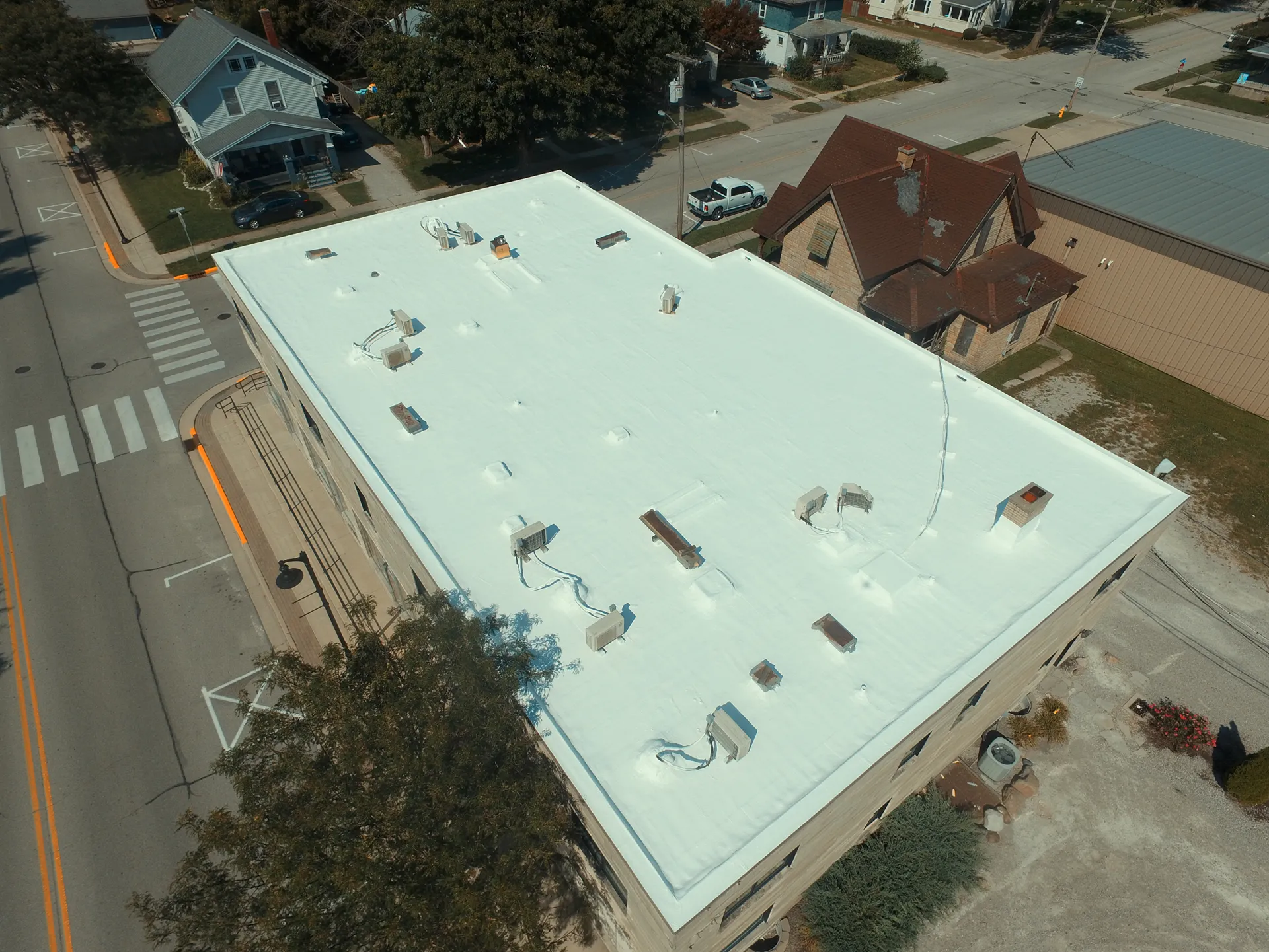
Your commercial roof is one of the most important assets in your business—yet it’s easy to forget about it until something leaks, blows off, or starts causing disruptions. The roof protects your people, your equipment, your inventory, and your ability to operate without costly downtime.
That’s why understanding commercial roofing costs matters. Not so you can “shop the cheapest,” but so you can budget wisely, compare proposals fairly, and invest in a system that performs for the long haul.
This guide breaks down the most common commercial roofing systems, the major factors that influence cost, and how to get an accurate estimate for your building.
Typical Commercial Roofing Systems and How They Affect Cost
Different roof systems come with different material costs, labor requirements, service life expectations, and maintenance needs. The “best” choice depends on your building type, roof design, and performance goals—not just the price tag.
Single-Ply Roofing Systems (TPO, PVC, EPDM)
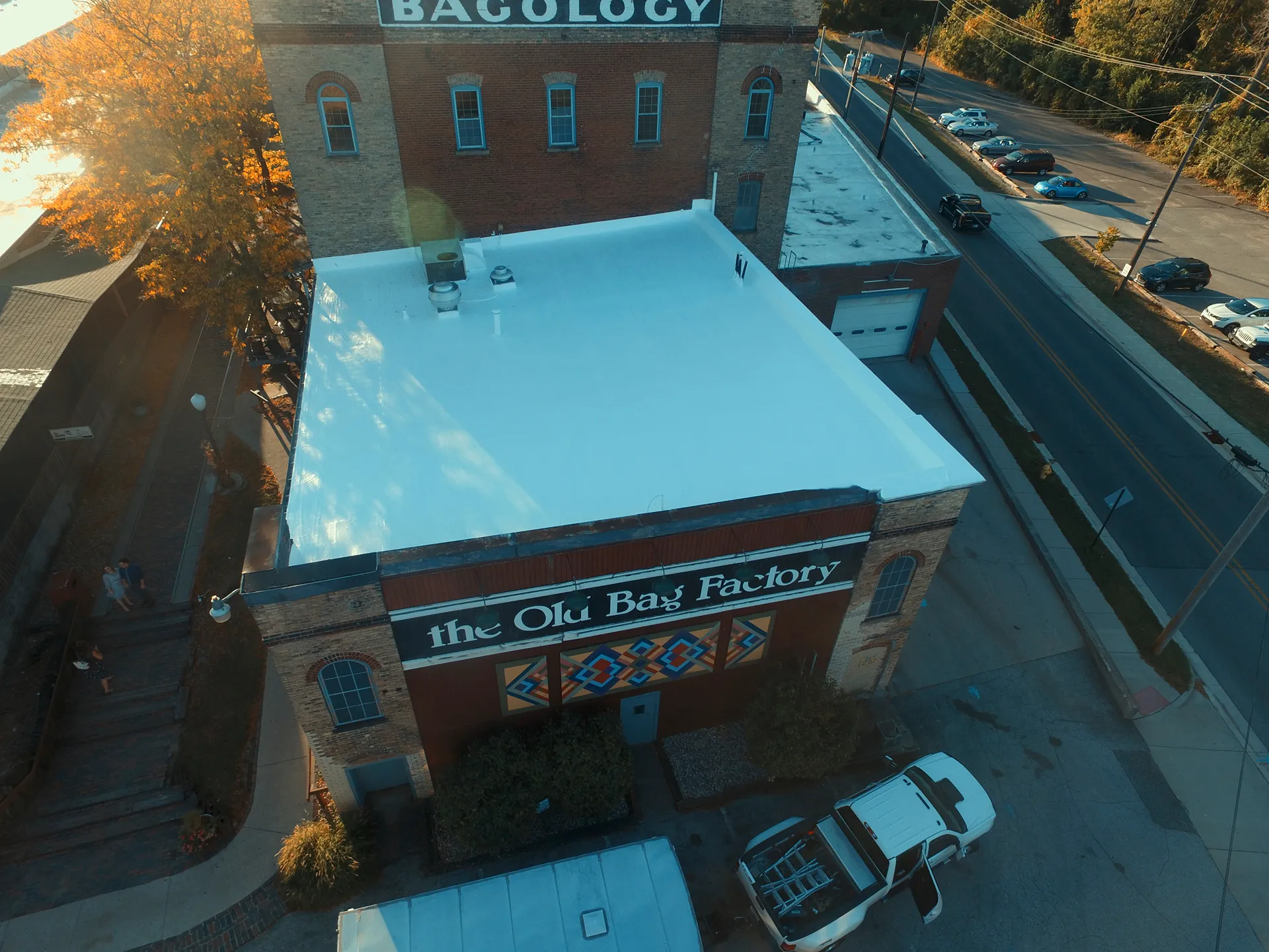
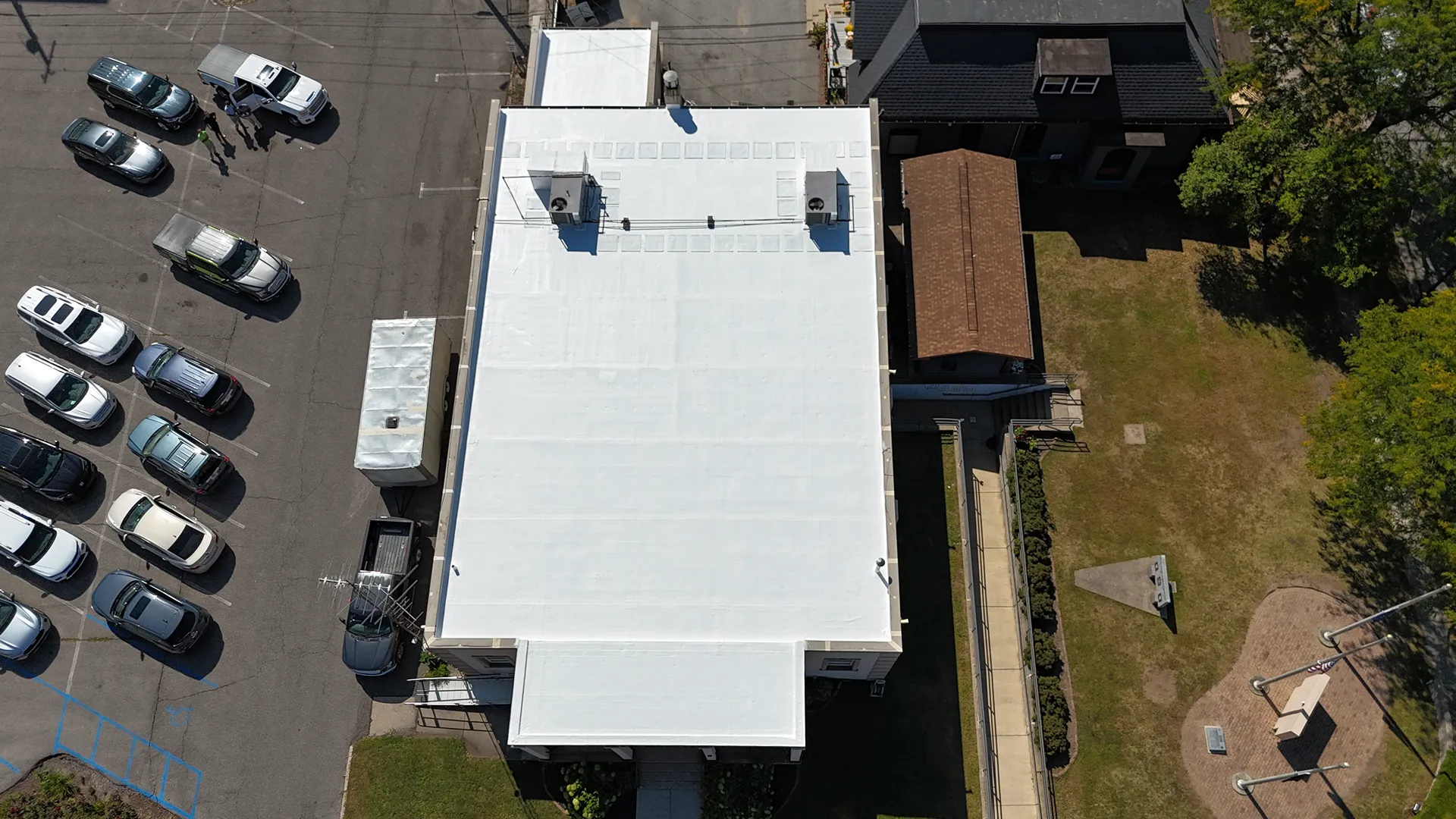
Single-ply membranes are popular for flat and low-slope commercial roofs because they install relatively quickly and provide a clean, watertight surface when installed correctly. These systems are valued for chemical resistance, UV performance (depending on the membrane type), and energy efficiency—especially with reflective “cool roof” options.
Costs vary based on membrane type, thickness, how it’s installed (fully adhered vs. mechanically attached), insulation requirements, and roof complexity. Single-ply systems can be a strong value when you need a reliable roof with efficient installation and predictable performance.
Metal Roofing
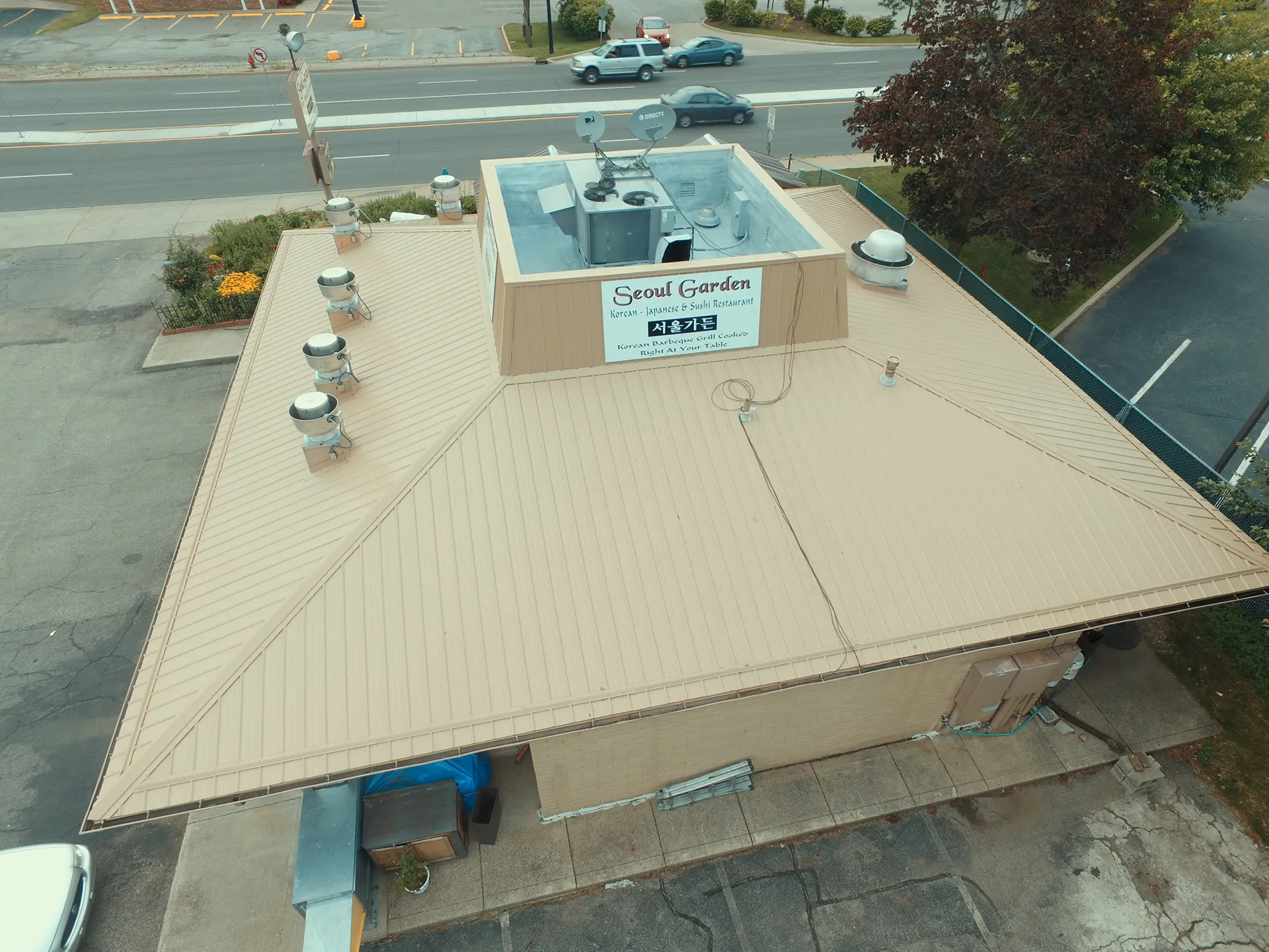
Metal roofing is often chosen for longevity, durability, and appearance. Many commercial owners like metal because it can deliver decades of service life when properly installed and maintained. It can also be paired with restoration strategies over time, which may reduce lifecycle costs.
The tradeoff is that metal often has a higher upfront investment, and the final price depends heavily on panel type, gauge, coatings/finishes, insulation, and the detailing around penetrations and edges. Metal can also require thoughtful design for expansion and contraction.
Built-Up Roofing (BUR)
Built-up roofing is a multi-layer system that has been used for decades on commercial buildings. It’s known for toughness and strong waterproofing when installed by experienced crews. Depending on the design, BUR can also provide solid insulation value.
Because BUR is layered and labor-intensive, installation quality matters a lot—and the system’s weight and assembly details can affect cost. It can be a good fit for certain facilities, especially where durability and redundancy are priorities.
The Biggest Factors That Influence Commercial Roofing Costs
Even if two buildings use the same roof material, the final price can be very different. Here are the practical variables that most often move the number up or down.
Roof Size and Roof Complexity
Roof size is straightforward: more square footage typically means more materials and labor. Complexity is where costs can jump.
A roof with multiple elevations, lots of penetrations (HVAC units, skylights, vents), parapet walls, drains, scuppers, and edge detailing generally takes more time and more precision to install correctly. Complex roofs may require custom flashing, additional safety steps, and more staging time—each of which affects cost.
Material Selection and System Design
Material choice influences cost in obvious ways, but design decisions inside the system also matter—like membrane thickness, attachment method, and the type/amount of insulation.
Some systems cost more upfront but deliver better durability, better energy performance, or fewer repairs over time. This is why “lowest bid” and “lowest cost” are often not the same thing.
Tear-Off vs. Recover (Installing Over the Existing Roof)
One of the biggest cost drivers is whether the old roof must be removed.
A full tear-off adds labor, disposal, and sometimes deck repairs. In some cases, a roof can be installed over an existing system (a “recover”), but only if the existing roof is in acceptable condition and local code allows it. A proper inspection is essential here—covering over trapped moisture or bad substrates can shorten the life of the new roof.
Roof Access, Staging, and Safety Requirements
Access conditions affect labor efficiency and equipment needs. A simple, open site is different from a tight downtown property, a multi-story building, or a facility with limited laydown space.
Commercial roofing often requires safety systems, fall protection, and jobsite controls. Depending on building height and site constraints, your contractor may need lifts, cranes, scaffolding, or additional crew time for safe material handling.
Insulation and Energy Performance Goals
Insulation affects both your roof cost and your operating cost.
More insulation (or higher-performing insulation) typically increases the upfront project cost—but can reduce heating and cooling expenses and improve occupant comfort. If energy efficiency is a goal, it’s worth discussing insulation thickness, thermal bridging, and whether reflective/cool roofing makes sense for your building.
Location, Climate, and Building Code Requirements
Labor rates, material availability, and permitting requirements vary by region. Climate matters too.
Areas with heavy snow loads, frequent high winds, freeze-thaw cycles, or harsh sun exposure may require stronger assemblies, upgraded fastening patterns, enhanced drainage planning, or better-performing materials. Local code requirements can also influence insulation minimums, fire ratings, and installation specifications—all of which can affect cost.
Commercial Roofing Price Ranges: A Realistic Starting Point
Pricing can vary widely, but many owners find it helpful to understand typical ranges as a starting point. The numbers below are best used for early budgeting—not as a final estimate—because your building-specific variables will drive the real price.
Common ballpark ranges (often discussed in the industry) include:
- Asphalt shingles (more common on steep-slope roofs): $1–$4 per sq. ft.
- Single-ply membranes: $3–$7 per sq. ft.
- Modified bitumen: $3–$8 per sq. ft.
- Built-up roofing (BUR): $5–$10 per sq. ft.
- Metal roofing: $5–$12 per sq. ft.
Your final price can move significantly based on tear-off requirements, insulation, deck repairs, access constraints, and the level of detail needed around penetrations and edges. The most reliable next step is a professional inspection and a written scope of work.
How to Compare Roofing Quotes Without Getting Burned
When reviewing proposals, try not to compare only the bottom-line number. Two bids can look similar while offering very different systems and long-term outcomes.
A solid commercial roofing proposal should clearly state:
- The exact system being installed (materials, thickness, attachment method)
- Whether tear-off is included (and how many layers)
- Insulation type and thickness
- Flashing scope (penetrations, parapets, drains, edges)
- Warranty information and who provides it
- Timeline and how the contractor will protect your operations during work
If a bid is vague, it’s hard to hold anyone accountable later.
Get an Accurate Commercial Roofing Quote for Your Building
Commercial roofing costs depend on your roof’s condition, your building’s needs, and the best system for your goals—not just the material label.
At Tri-County Commercial Roofing, we help building owners understand their options clearly, evaluate the roof’s current condition, and choose a solution that fits both performance needs and budget. If you want to learn the true cost for your facility, the next step is a professional inspection and a detailed quote built around your roof—no guesswork.