
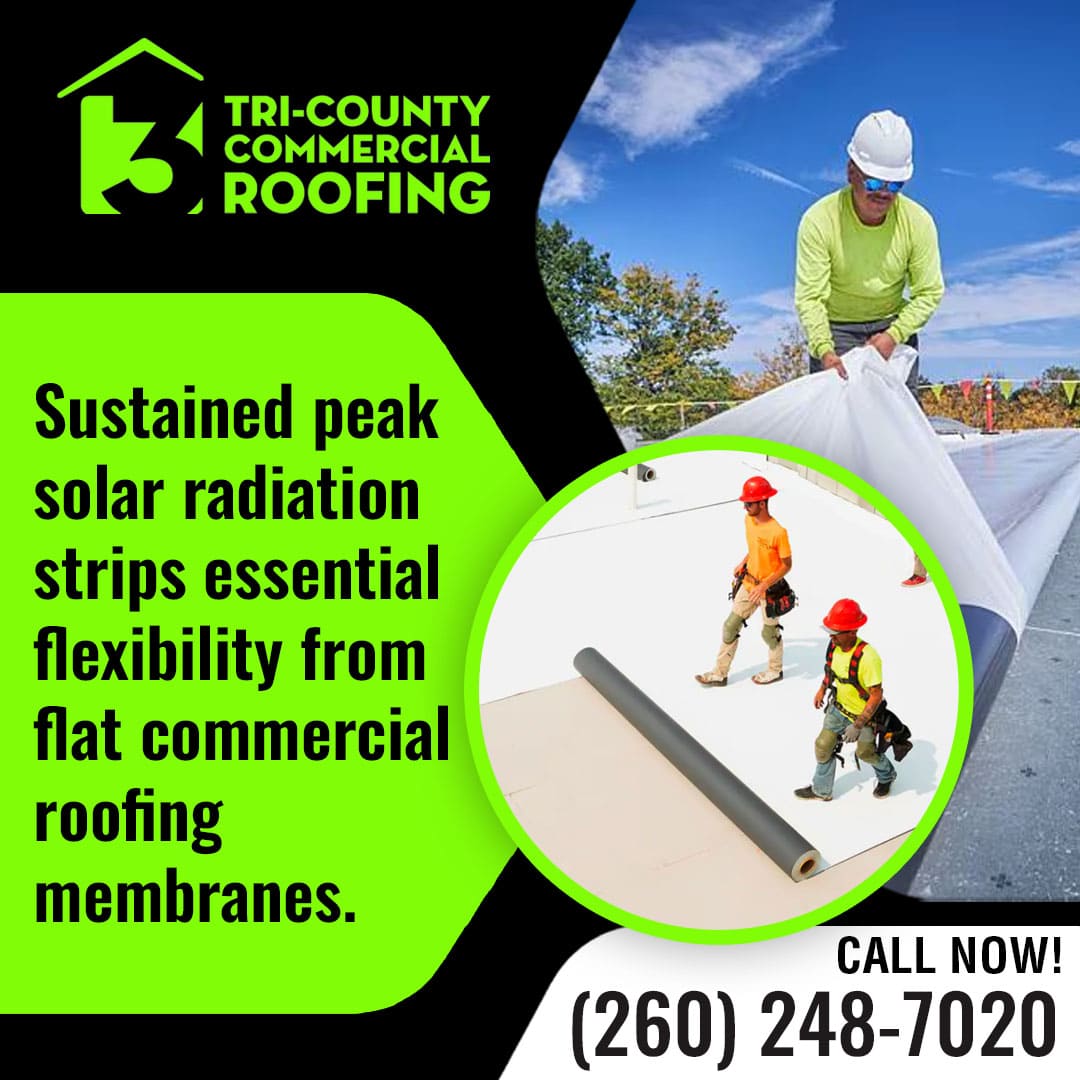
Yes. UV radiation breaks down roofing membranes at the molecular level, causing brittleness, cracking, and early failure. In Fort Wayne, IN, the UV Index reaches 9–10 from April through September, placing flat and low-slope commercial roofing systems under sustained solar stress for months at a time. Without UV-resistant systems or routine maintenance, the damage compounds quickly.
Key Takeaways:
- UV degradation causes photo-oxidation in roofing membranes, stripping flexibility and triggering surface cracking.
- Fort Wayne averages 182 sunny days per year, with UV Index levels peaking at 9–10 from April through September.
- Best defense: UV-reflective membranes installed by a certified commercial roofing contractor protect both roof integrity and warranty coverage.
What Does UV Radiation Actually Do to a Roof?
UV rays degrade roofing materials through photo-oxidation, a chemical breakdown that strips polymer chains of their flexibility. Membranes become stiff, crack, and allow water to penetrate. It happens on any clear day, across every major commercial roofing system.
UV Vulnerability by Roofing System
| Roofing System | UV Vulnerability | Common Damage Signs |
| TPO | Moderate | Surface chalking, seam separation |
| EPDM (Rubber) | High without coating | Cracking, shrinkage, brittleness |
| Modified Bitumen | High | Granule loss, surface erosion |
| Built-Up Roofing (BUR) | Moderate to High | Alligatoring, surface oxidation |
| Silicone Coating Systems | Low | Minimal, formulated for UV resistance |
Flat roofs have no pitch to deflect sunlight. Fort Wayne’s sunniest month, July, averages 345 hours of sunshine. Roofs absorb direct UV radiation for hours each day, with solar intensity at its highest during those peak summer months.
How Does UV Damage Lead to Commercial Roof Repair or Replacement?
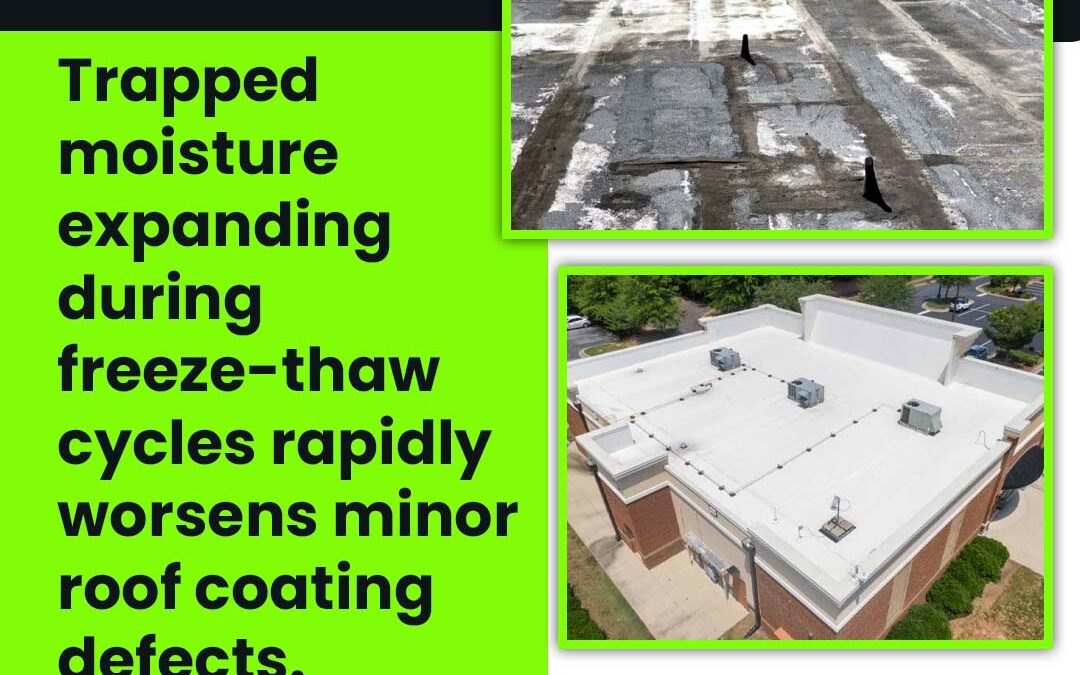
UV degradation rarely causes sudden failure. The roof weakens gradually until a rainstorm or freeze-thaw cycle finishes the job. By the time leaks appear inside, the membrane has often been deteriorating for years.
Typical UV Failure Sequence
- Surface oxidation – membranes harden and chalk or discolor.
- Micro-cracking – forms at seams, penetrations, and areas with standing water.
- Seam failure – heat-welded or adhesive seams separate under repeated thermal stress.
- Water infiltration – enters through cracks or failed seams after rain or snowmelt.
- Substrate damage – insulation and roof decking are now exposed to moisture.
Commercial roof repair can address surface symptoms. If insulation has been saturated, commercial roof replacement is usually the more cost-effective long-term decision.
What Protects a Roof from UV Damage in Fort Wayne?
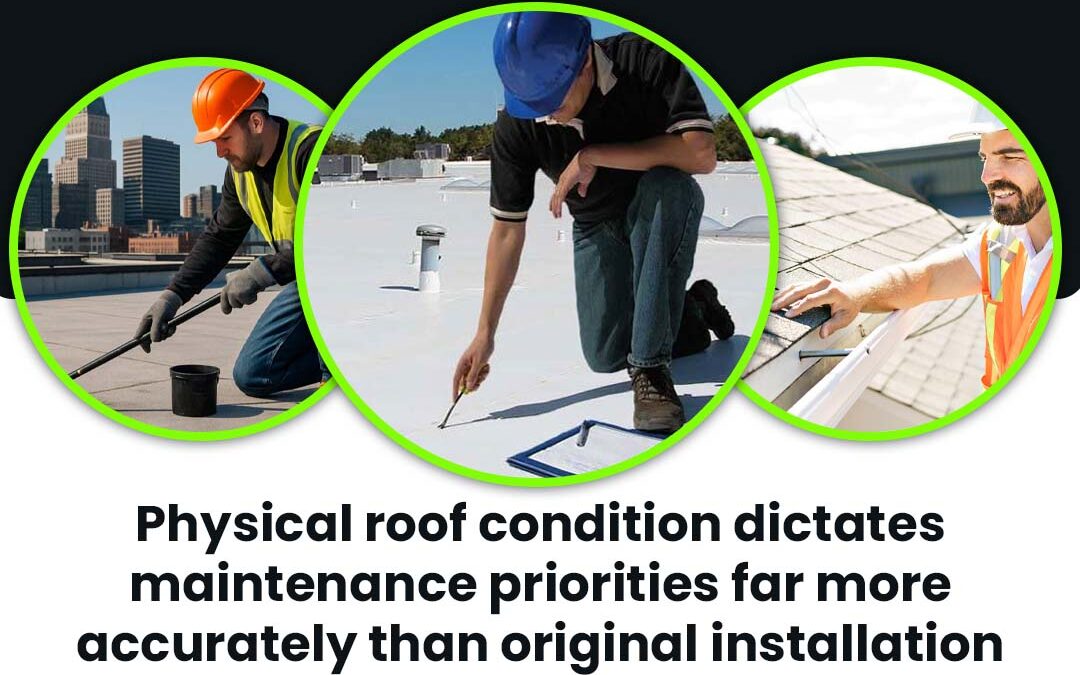
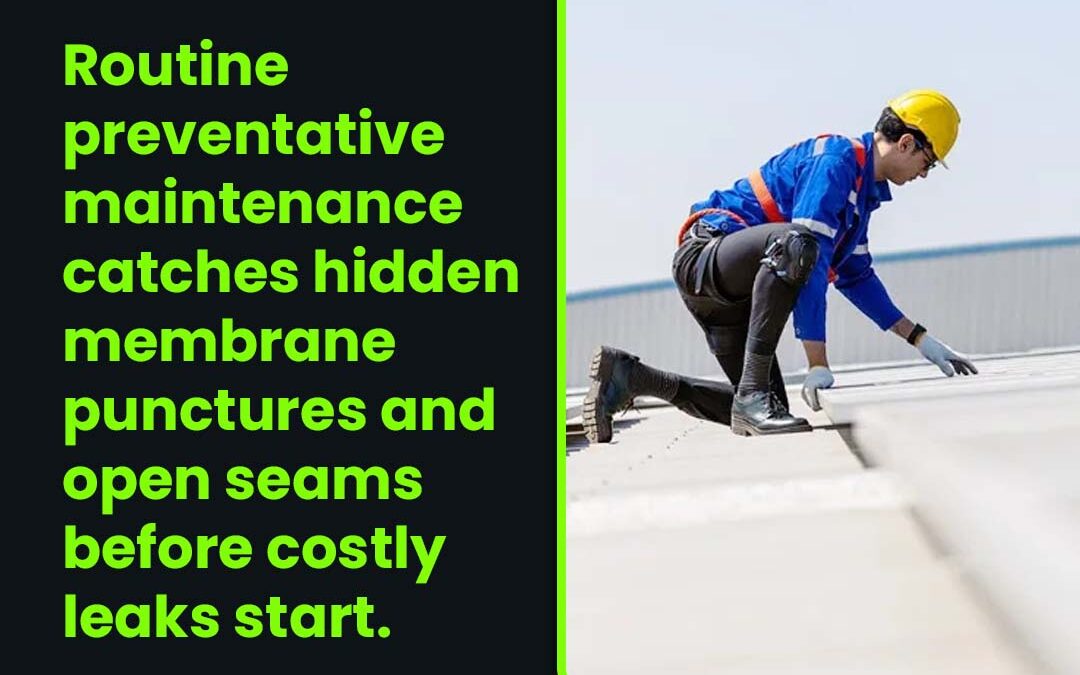
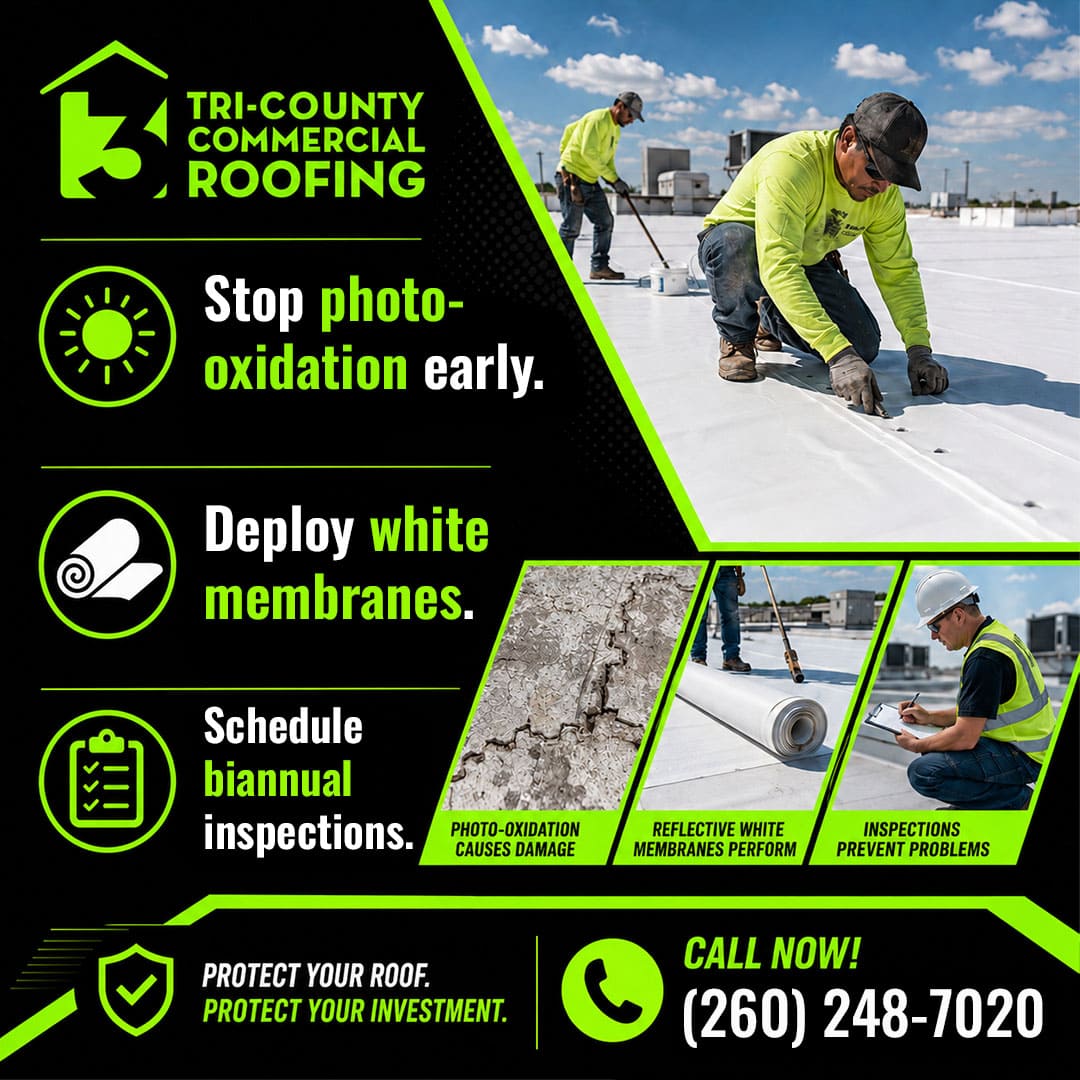
- Schedule biannual inspections in spring and fall to catch surface oxidation before cracking sets in.
- Choose UV-reflective membranes. White TPO and silicone systems reflect solar energy and slow photo-oxidation.
- Work with a certified commercial roofing contractor. Factory-trained installers meet manufacturer specifications, keeping warranties valid.
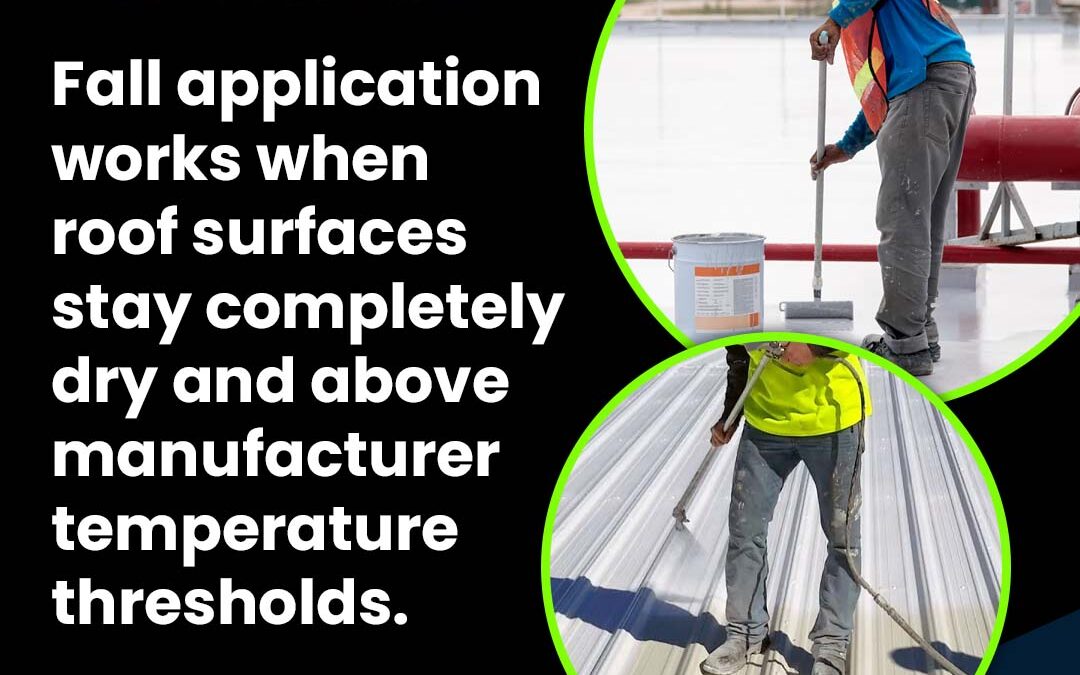
- Apply restoration coatings early. If the membrane is intact and the substrate is dry, a silicone coating can extend service life without full replacement.
Roofs installed to manufacturer specs consistently outlast systems put together without proper certification. A factory-trained installer does not guess at seam width or adhesive coverage. Those details are what separate a 20-year roof from a 10-year repair cycle.
Schedule Your Commercial Roof Inspection in Fort Wayne
If your commercial roof has not been inspected this year, now is the time to act. UV damage builds quietly and is far cheaper to address early than after water has reached the substrate. Call Tri-County Commercial Roofing at (260) 248-7020 to schedule a roof assessment with a certified, factory-trained installer who works exclusively on commercial buildings.
Frequently Asked Questions
How do I know if UV damage has already affected my roof?
Look for surface chalking, visible cracking at seams, bubbling, or areas where the membrane appears stiff or discolored. A commercial roofing contractor can walk the roof and give you a clear assessment.
Does roof color affect how much UV damage occurs?
Yes. Dark-colored membranes absorb more radiation. White or light-colored surfaces reflect solar energy, reducing surface temperatures and slowing breakdown, which is a meaningful difference over a roof’s full service life.
How does a manufacturer’s warranty relate to UV damage?
Most warranties cover material defects, not standard weathering. Certified installation keeps workmanship warranties intact. Installations done without proper certification frequently void both.