
Drainage problems show up as standing water two or more days after rain, interior ceiling stains, overflowing gutters, and mold odors inside the building. Catching these early protects your commercial roof coating and avoids costly repairs. Tri-County Commercial Roofing LLC helps Fort Wayne property owners identify and address these issues before they reach the structure below.
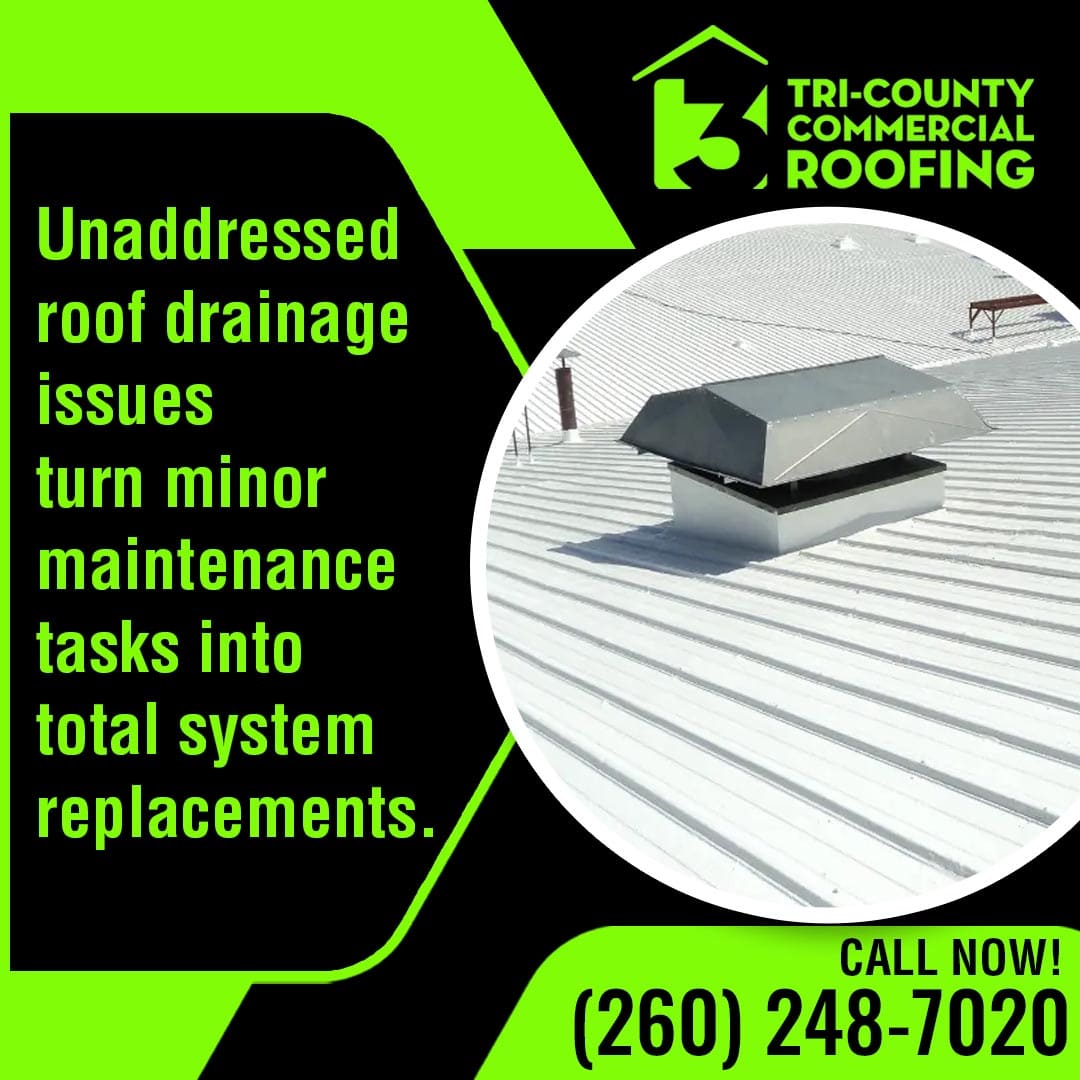
Why Do Drainage Problems Shorten the Life of a Commercial Roof Coating?
When water sits on a roof for more than 48 hours, it breaks down the coating from above and traps moisture beneath it. Both conditions destroy adhesion, accelerate membrane deterioration, and cut years off the coating’s useful life.
A commercial roof coating depends on proper drainage to perform as designed. Poor drainage does not just damage the surface. It works against the entire roofing system from the membrane down to the deck, turning a manageable maintenance issue into a premature replacement.
What Are the Warning Signs of Roof Drainage Problems?
If you notice any of the following, do not wait for an active leak to act. Older roofs without a recent inspection should also be assessed regardless of visible symptoms.
Standing Water Two or More Days After Rain
Standing water beyond 48 hours signals clogged drains, insufficient slope, or compressed insulation holding water in place.
Water Stains on Interior Ceilings or Walls
Ceiling staining means water has already worked through multiple roof layers. On flat roofs, water travels horizontally along the deck before breaking through, so the stain often appears far from the actual entry point.
Sagging or Soft Ceiling Areas
A sagging ceiling means water has collected above it. Saturated insulation adds load to the roof deck and weakens structural components below.
Overflowing Gutters and Scuppers
Gutters and scuppers that cannot handle normal rainfall are blocked. Seasonal debris and winter buildup are the most common causes in Fort Wayne.
Moss or Algae on the Roof Surface
Visible biological growth means water has been sitting long enough to support it and has been degrading the membrane throughout.
Mold or Mildew Odor Inside the Building
A persistent musty smell in the upper portion of a building points to moisture that entered through the roof and saturated insulation below.
Any of these signs points to a drainage issue that is already affecting your roof. The longer it goes unaddressed, the more it costs to fix. A professional roof inspection identifies the source of the problem before it reaches the structure below.
What Causes Drainage Problems on Fort Wayne Commercial Roofs?
Most drainage issues trace back to one or more of these:
- Clogged drains and scuppers from debris and winter buildup
- Compressed insulation from foot traffic or long-term moisture saturation
- Rooftop HVAC units causing deck sag
- Building settlement creating new low spots
- Insufficient original slope
Most drainage issues trace back to one or more of these conditions. Catching them early keeps the roofing system intact and limits the extent of commercial roof coating repair needed to restore performance.

Talk to a Fort Wayne Roof Coating Specialist Before It Costs You More
Drainage problems do not resolve on their own. Each rain and freeze cycle adds to the damage when a clogged drain or low spot goes unaddressed. Call Tri-County Commercial Roofing at (260) 248-7020 to schedule a professional assessment. We provide commercial roofing services, including roof coating, to Fort Wayne, IN, and commercial properties throughout the region.
Frequently Asked Questions
Can I spot drainage problems without getting on the roof?
Yes. Ceiling stains, overflowing gutters, visible moss or algae, and mold odors are all signs you can identify from inside the building or from the ground.
Will fixing the drainage also fix my roof coating?
Fixing drainage removes the condition causing coating breakdown. If the coating has already cracked or delaminated, commercial roof coating repair will still be needed afterward.
How often should a Fort Wayne commercial roof be inspected for drainage issues?
The NRCA recommends two professional inspections per year, in spring and fall. The spring visit should account for winter debris buildup and freeze-thaw damage to drains and scuppers. Scheduling these with a certified roof coating contractor ensures drainage issues are identified before they compound.