
TPO (Thermoplastic Polyolefin), PVC (Polyvinyl Chloride), and EPDM (Ethylene Propylene Diene Monomer) are the most widely used single-ply commercial roofing systems for flat and low-slope buildings, including commercial properties throughout Fort Wayne, IN. For heat and UV resistance, white TPO and PVC outperform standard black EPDM because their reflective surfaces reduce surface temperatures and slow UV breakdown. The right choice depends on your building type, budget, and ownership timeline.
How Do TPO, PVC, and EPDM Compare Against Heat and UV?
Fort Wayne summers push UV index levels to 9–10 from April through September. Every commercial roofing system on a flat or low-slope building faces that exposure directly. Here is how the three systems respond.
UV and Heat Performance by Material
| Roofing System | UV Resistance | Heat Performance | Estimated Lifespan |
| TPO (white membrane) | Good, with UV stabilizers built into the membrane | Reflects solar heat, lowers cooling costs | 15–25 years |
| EPDM (black membrane) | Good, with carbon black providing long-term UV resistance | Absorbs heat, raises summer cooling costs | 25–30+ years |
| PVC | Excellent, with the longest proven track record of the three systems | Reflective surface, strong seam performance | 30+ years |
TPO
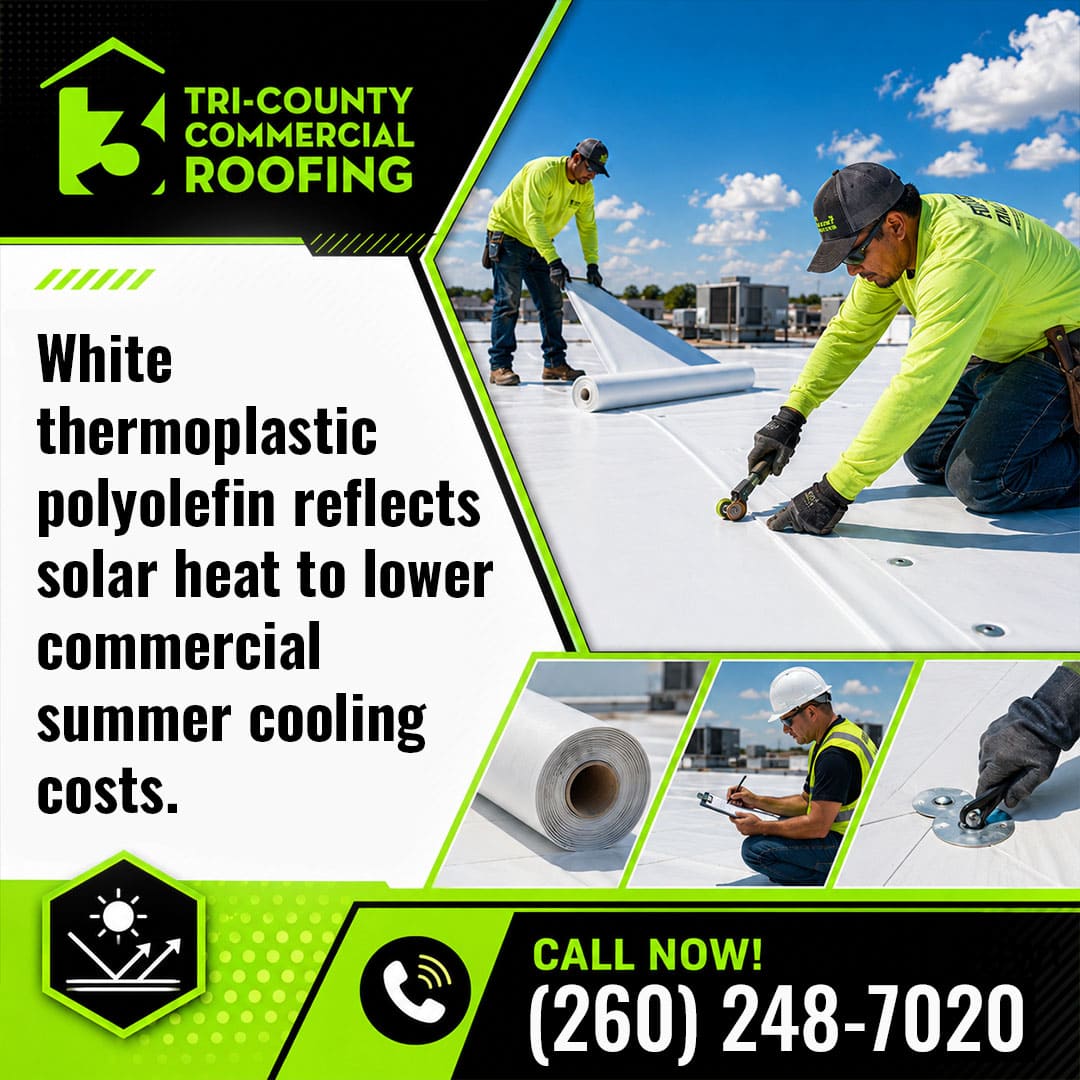
The white reflective surface of TPO deflects UV radiation rather than absorbing it, slowing the photo-oxidation process that breaks down roofing membranes over time. Not all TPO performs equally. Cheaper formulations show premature UV degradation, which makes manufacturer selection important. Working with a certified commercial roofing contractor who sources from reputable manufacturers directly affects how long a TPO system holds up against Fort Wayne’s summer UV exposure.
EPDM
EPDM contains carbon black that provides strong UV protection without noticeable degradation over decades. Its drawback in Fort Wayne’s summers is heat absorption. A reflective surface runs 50–60°F cooler than black EPDM on hot days. White EPDM is available and offers improved solar reflectance over standard black EPDM, though it carries a higher cost than the standard black membrane.
PVC
PVC roofing originated in Europe in the 1960s and has been installed on commercial buildings in the United States since the 1970s, giving it the longest proven performance record of the three systems. Its heat-welded seams and UV-resistant formulation hold up well under sustained solar exposure. PVC is also the preferred system in industrial facilities where grease or chemical exposure is a factor.
What Should Fort Wayne Property Owners Consider When Choosing a System?
- Building use: Warehouses and manufacturing facilities do well with TPO or EPDM. Restaurants and chemical-adjacent facilities are better served by PVC.
- Ownership timeline: Longer ownership favors PVC or EPDM for lifespan. For projects where upfront cost is the primary driver, TPO is generally the more budget-friendly starting point.
- Installation expertise: The best material means nothing without proper installation. A factory-certified commercial roofing contractor is the deciding factor in how long any system lasts.
Schedule a Commercial Roof Assessment in Fort Wayne
If you are unsure which single-ply roofing system fits your building, or your current roof is showing signs of UV damage that may need commercial roof repair, call Tri-County Commercial Roofing LLC at (260) 248-7020 to schedule an assessment with a certified, factory-trained installer who works exclusively on commercial buildings.
Frequently Asked Questions
Does membrane thickness affect UV resistance?
Yes. Thicker membranes hold up better under sustained UV exposure than thinner versions. They resist surface degradation longer and generally carry stronger manufacturer warranties, which is worth discussing with your installer before committing to a system.
What are the early warning signs of UV damage on a commercial roof?
Surface chalking, visible cracking at seams, membrane stiffness, and discoloration are the most common indicators. If any of these appear, a professional assessment is the next step. Catching UV damage early keeps repair costs manageable and extends the roof’s remaining service life.
Can an existing roof be coated instead of replaced?
Yes, if the membrane and substrate are in acceptable condition. A silicone or acrylic coating adds UV protection and extends service life without a full commercial roof replacement. A certified contractor can assess whether your roof qualifies.