

Standing water on a flat commercial roof can look harmless after a storm. But if that water is still sitting there two days later, you have a ponding water problem that is actively degrading your commercial roof coating. At Tri-County Commercial Roofing LLC, we see the damage this causes across Fort Wayne and the surrounding region on a regular basis.
The short answer: Yes, ponding water shortens the life of your commercial roof coating. How quickly that happens depends on the coating type, the depth of the water, and how long it stays.
What Counts as Ponding Water?
Ponding water is defined as water that remains on a roof surface for more than 48 hours after the most recent rain event ends. Most commercial flat roofs are built with a slight slope, typically 1/4 inch per foot, to direct water toward drains. When that system fails, water sits and collects. Common causes include clogged drains, compressed insulation, rooftop HVAC equipment, and building settlement over time.
What Ponding Water Does to a Roof Coating
It Breaks Down the Coating from the Inside
Water is a weak solvent. With extended contact time, it leaches materials out of a coating film and weakens its structure. The Asphalt Roofing Manufacturers Association confirms that ponding water damages the roof surface, deforms deck structure, and creates conditions that accelerate membrane breakdown across roofing systems. The real question is which coating chemistry holds up the longest.
It Speeds Up Surface Deterioration
Sunlight hitting standing water degrades the membrane, and getting moisture off a roof is fundamental to its longevity. UV rays intensify through pooled water, particularly on white or reflective surfaces, accelerating breakdown right where the coating is already under stress.
It Causes Cracking and Delamination
Acrylic coatings, one of the most common types used in commercial roof coating repair, are especially vulnerable to long-term immersion. Known failure modes include micro-cracking, delamination, and biofilm buildup. Once the coating cracks, water works into the substrate below, and the damage compounds quickly.
It Adds Load That the Roof Was Not Designed to Hold
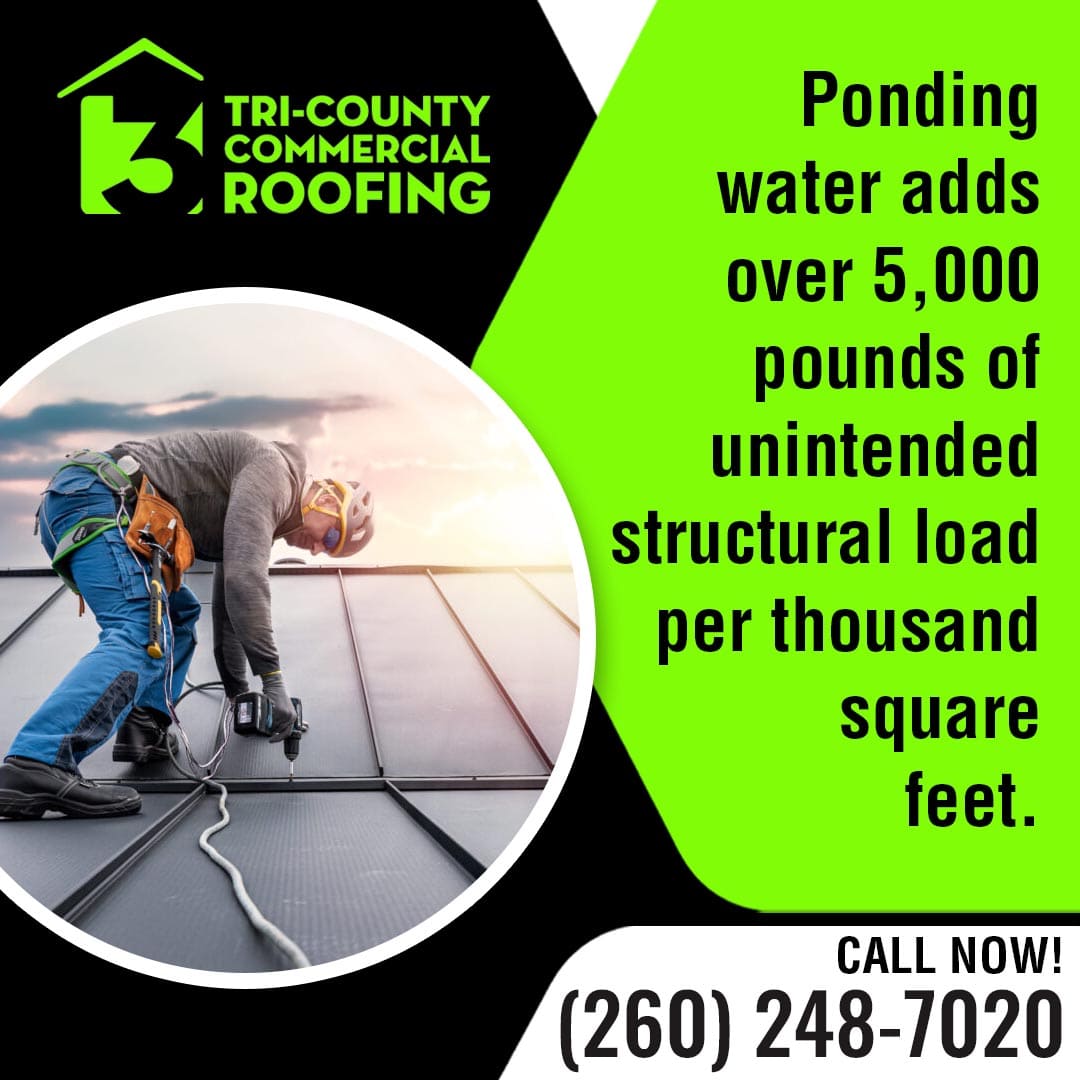
Fresh water weighs 62.4 pounds per cubic foot. According to the ASCE 7 structural standard via IIBEC, that translates to 5.2 pounds per square foot for every inch of standing water on a roof. A 1,000 square foot pond at just one inch deep adds more than 5,000 pounds of unintended load to the structure. That weight deepens depressions, compresses insulation further, and creates conditions for larger ponds during the next rain event.
Coating Over the Problem Makes It Worse
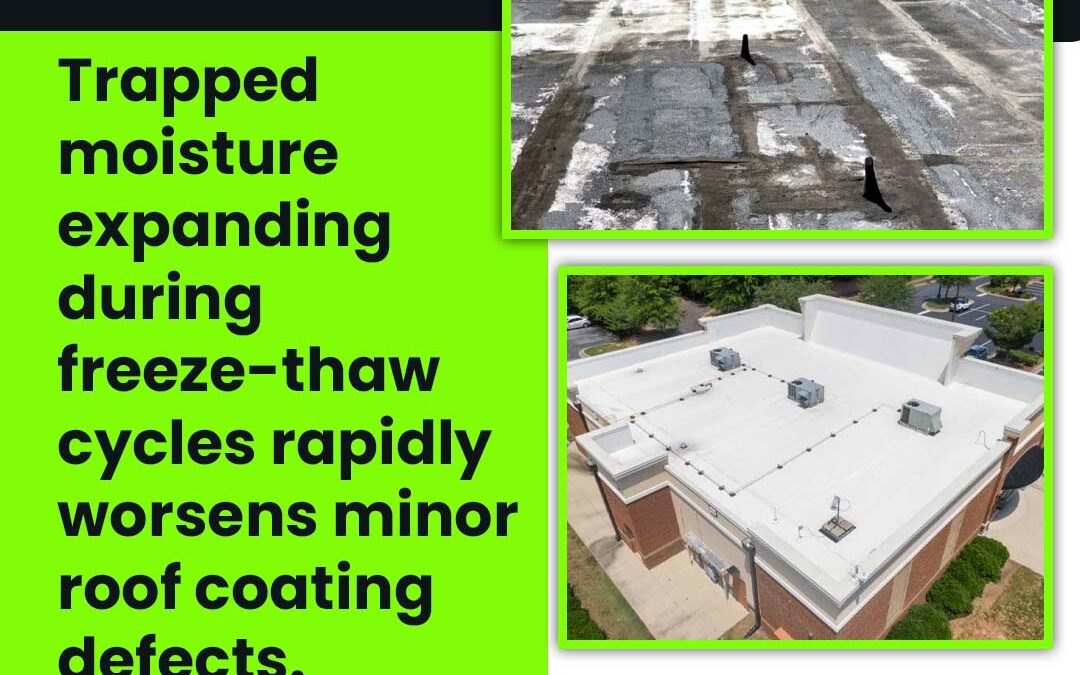
Applying a roof coating over an unresolved ponding issue does not protect the roof. It traps moisture between the coating and the substrate, destroying adhesion from below. The coating fails faster, the substrate continues degrading underneath, and commercial roof coating repair becomes unavoidable sooner than it should be. Addressing drainage before applying a coating is what separates a lasting result from a temporary fix.

Get a Straight Answer From a Certified Roof Coating Contractor in Fort Wayne
Ponding water is a drainage problem first and a coating problem second. Fixing the coating without fixing the drainage produces a short-term result. A certified roof coating contractor walks the roof, identifies what is causing water to collect, and addresses those issues before any coating work begins.
Call Tri-County Commercial Roofing at (260) 248-7020 to schedule a professional assessment. We serve Fort Wayne, IN, and commercial properties throughout the region.
Frequently Asked Questions
Can ponding water void my commercial roof coating warranty?
Yes. Most coating manufacturers exclude ponding water from warranty coverage, particularly acrylic systems. Once water sits beyond 48 hours, warranty protections may no longer apply.
Do I need to fix my drainage before getting a new roof coating?
Yes. Applying a coating over an unresolved drainage problem traps moisture beneath it and accelerates failure. Drainage has to be corrected first for any coating work to hold.
How do I know if ponding water has already damaged my coating?
Look for water stains on interior ceilings after rain, soft spots overhead, mold or mildew odor in upper areas of the building, or visible algae growth on the roof surface. Any of these is a sign that professional assessment is needed.