
Seam failures are one of the most common sources of active leaks on commercial roofs, yet they rarely announce themselves with a visible drip or an obvious crack. Flat and low-slope systems are the standard roof type on warehouses, manufacturing facilities, multi-tenant buildings, and agricultural properties across Indiana. On these systems, the joints where membrane sections meet are where water finds its way in. From there, water moves silently through the roof assembly, saturating insulation and reaching metal decking long before a ceiling stain appears inside the building.
Tri-County Commercial Roofing LLC has worked with commercial property owners throughout the Fort Wayne, IN region since 2014, responding to exactly these situations. As a commercial-only contractor and certified installer of commercial roofing systems, our team brings field-tested knowledge to every roof assessment. Whether the right path forward is a targeted roof coating repair, a full commercial roof coating application, or a more involved restoration, every recommendation starts with what the roof actually needs, not what is easiest to propose.
How Seamed Commercial Roof Systems Are Constructed
Traditional commercial roofing systems are installed in sections joined at seams.
- TPO (thermoplastic polyolefin) and PVC (polyvinyl chloride) membranes are heat-welded at the joints.
- EPDM (ethylene propylene diene monomer) systems use adhesive tape or bonding agents.
- Built-up roofing (BUR) relies on overlapping layers of bitumen and reinforcing fabric.
Every junction between sections creates a seam. Every seam is a location where the membrane is not continuous, and where environmental stress concentrates over time.
A building with a 20,000-square-foot flat roof may have hundreds of linear feet of seam running across the surface, plus additional flashing details at every penetration: HVAC curbs, pipe boots, drains, skylights, and parapet edges. Each one is a potential water entry point.
Understanding Seam Failures on Commercial Roofs
Causes of Seam Deterioration
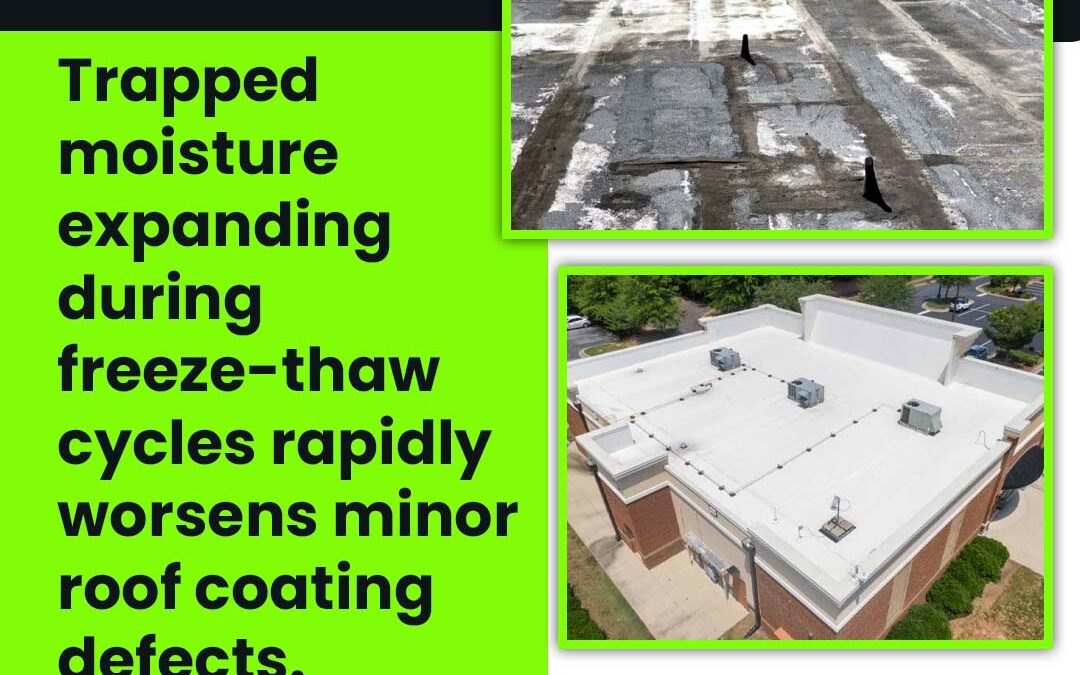
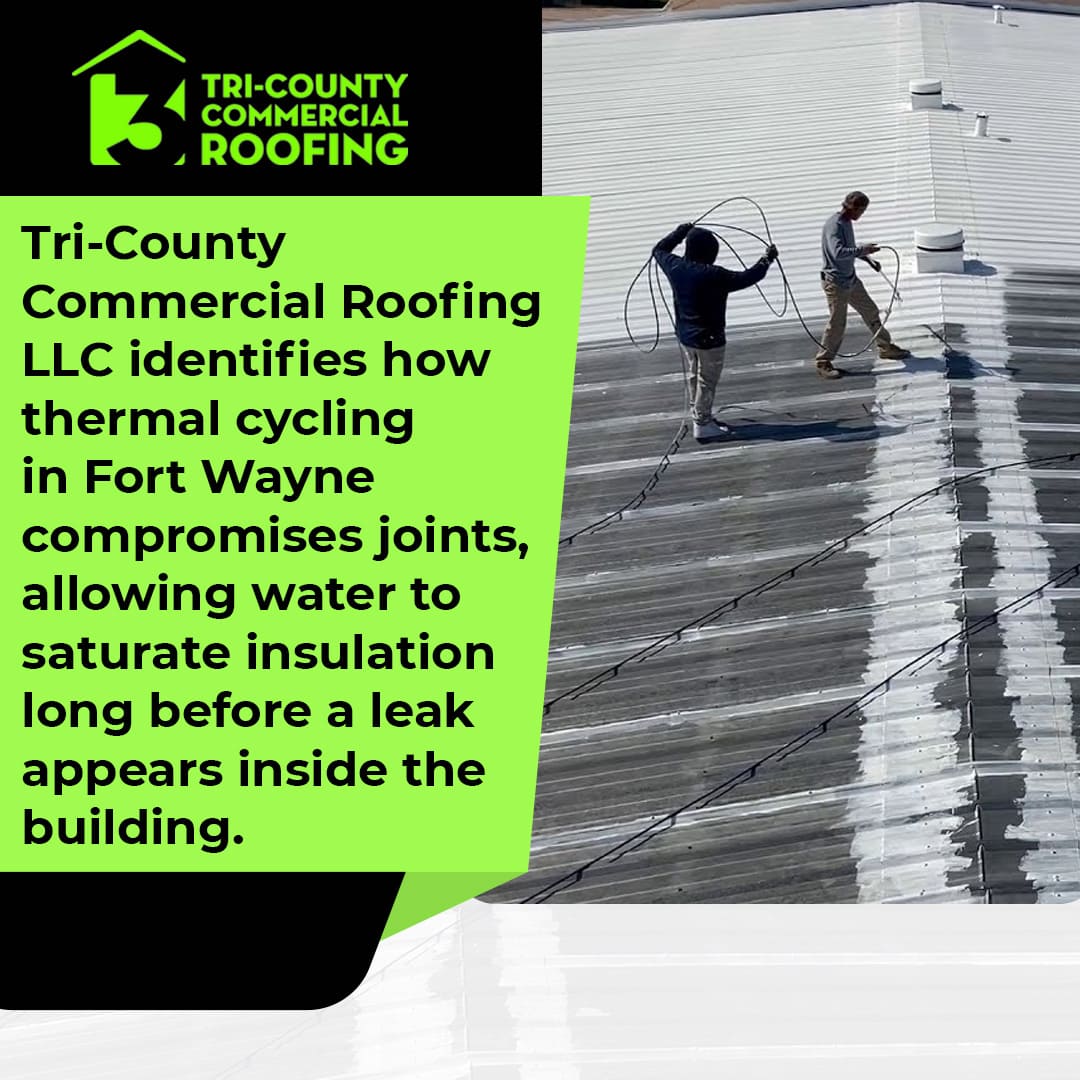
Seams fail primarily because of thermal movement, UV degradation, and weakened bond strength, not sudden damage. Indiana’s climate creates real thermal stress on commercial roof membranes. Temperatures shift from below freezing in winter to humid heat in summer. That cycle causes membranes to expand and contract repeatedly. Over time, that movement works against seam bonds.
On TPO and PVC roofs, heat-welded seams can separate when the original weld was performed at the wrong temperature or with insufficient overlap. Even a minor gap along a seam line is wide enough for wind-driven water to enter the roof assembly during a rain event.
On EPDM systems, adhesive bond strength degrades as the material ages. Bonded seams that performed well in year two may lose holding strength by year eight, especially when UV exposure and thermal cycling have been working against them throughout.
Wind uplift adds further stress. On a flat roof, wind creates differential pressure that pulls upward at seams, edges, and elevated joints. Seams that are already partially debonded are particularly vulnerable during storms.
Damage That Develops Inside the Roof Assembly
When a seam fails, water does not stay at the entry point. It migrates laterally through insulation before appearing inside the building. This is what makes seam failures so damaging when left unaddressed. The visible stain on a ceiling tile is almost never directly below the seam where water entered. It is often 10, 15, or 20 feet away, because water follows the path of least resistance through the insulation layer and along the metal decking beneath.
During that migration, three types of damage develop simultaneously.
- Insulation performance drops. Moisture saturation reduces the R-value, which is the measure of a material’s thermal resistance, of roof insulation. Wet insulation loses its ability to slow heat transfer through the roof assembly, which drives up HVAC operating load with no visible cause inside the building.
- Metal components begin to corrode. Water reaching steel decking starts a corrosion process that weakens the structural substrate over time. Once deck corrosion is confirmed, the scope of repair expands well beyond the roofing surface.
- Mold conditions develop quickly. Trapped moisture creates conditions for mold growth within 24 to 48 hours. In facilities with occupied spaces, including offices above a warehouse, tenant units in a multi-tenant building, or a church with classrooms below a flat roof, mold inside the building assembly creates liability exposure alongside the remediation scope.
Flashing as a Seam Failure Point
Flashing refers to the metal and membrane detailing that seals the roof around vertical surfaces, including HVAC curbs, vent pipes, skylights, and wall edges. Flashing is a seam that wraps a three-dimensional transition, and it ages faster than the flat field of the roof because it faces more direct movement and weather exposure.
Every penetration on a commercial roof creates a flashing detail. A building with multiple rooftop HVAC units, skylights, and pipe boots can have dozens of these transition points, each one a location where sealant can crack, where metal can pull away from the membrane, and where water can enter the assembly without producing an obvious interior stain for months.
The failure point in most commercial roof leaks is a seam at a transition detail, not a rupture in the flat field of the membrane.
How a Commercial Roof Coating Resolves Seam Vulnerability
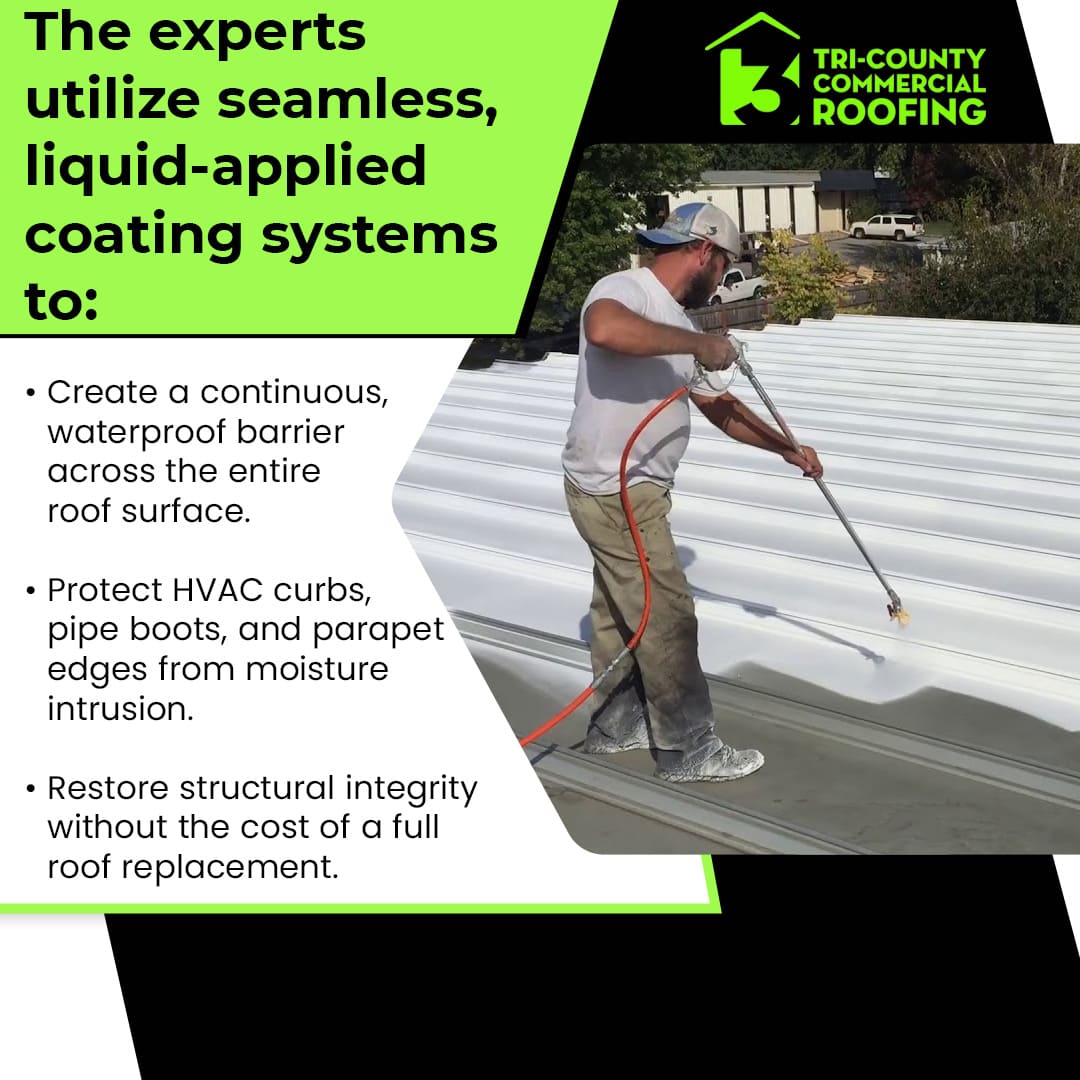
A roof coating is a liquid-applied membrane that cures into a single, seamless, waterproof layer across the entire roof surface, removing the joints where seam failures originate.
Unlike sectional membrane systems, a coating has no seams, no overlapping joints, and no adhesive bonds to degrade. Once cured, the membrane is continuous from edge to edge. Penetrations and flashing details are sealed into the same continuous layer, eliminating the transition points where most leaks begin.
For property owners whose seam failures return at the same locations year after year, that structural change in how the roof is waterproofed addresses the root cause rather than the symptom.
Coating Types and Their Applications
Different coating products are matched to different roof conditions. A certified roof coating contractor selects the product based on the existing membrane type, drainage profile, and the failure pattern present.
- Silicone coatings resist ponding water without degrading over time. Ponding water refers to water that remains on a flat roof surface for 48 hours or more after rainfall. Silicone is appropriate for flat roofs with drainage limitations and provides strong UV resistance.
- Elastomeric coatings are flexible membranes that expand and contract with temperature changes. For Indiana properties with significant seasonal thermal movement, elastomeric systems handle that cycling without cracking or separating.
- Acrylic coatings are water-based and reduce heat absorption at the roof surface. They perform well on metal roofs and single-ply membranes with consistent sun exposure.
- Polyurethane coatings provide impact resistance for roofs that see regular foot traffic from maintenance crews servicing rooftop mechanical equipment.
Product compatibility with the existing membrane is non-negotiable. An incompatible roof coating applied over an existing system, regardless of application quality, will fail ahead of schedule and may void the manufacturer’s warranty.
Targeted Repair vs. Full Recoating
Seam failures do not always require a full recoating project. A coating membrane that develops an isolated crack or seam separation can be addressed through commercial roof coating repair, which is a targeted correction at the specific failure point using materials compatible with the existing system.
The repaired section bonds back into the surrounding membrane, restoring waterproofing continuity without disturbing the rest of the performing roof surface.
When Targeted Repair Is the Right Scope
Targeted commercial roof coating repair is appropriate when three conditions are present:
- The failure is isolated to a clearly defined area, such as a single blister near a drain, a seam separation at one HVAC curb, or a small area of delamination at a parapet edge.
- A moisture survey confirms the substrate beneath is dry. A moisture survey is a non-destructive scan that detects trapped water in the insulation layer without requiring physical core cuts.
- The existing coating retains adhesion and integrity across the majority of the roof surface, indicating remaining service life.
When Full Recoating Becomes Necessary
When failure appears across multiple sections at once, including separation at the north parapet, deterioration near several HVAC penetrations, and cracking at the drainage field, that pattern signals the coating system as a whole has reached a condition where full recoating is the appropriate scope.
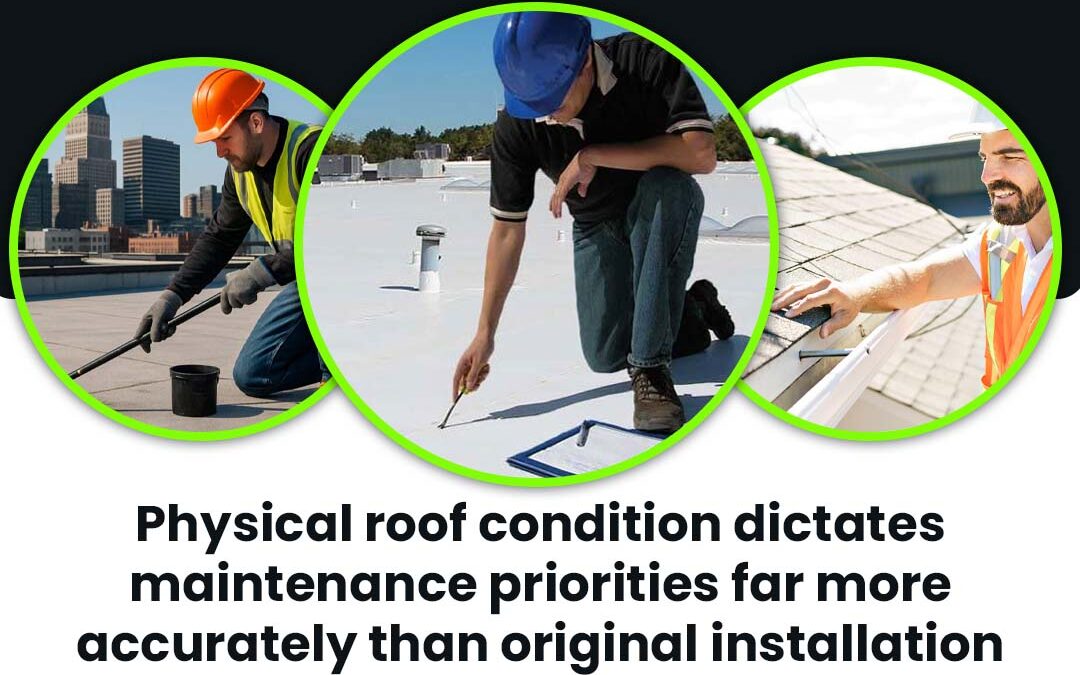
Isolated repairs on a roof with distributed failure will not produce durable results. The distinction between a repair candidate and a recoating candidate requires an on-site evaluation by a qualified roof coating contractor. It cannot be determined from ground level or photographs alone.
What to Watch For and What to Do Next
Warning Signs That Seam Failure Has Already Started
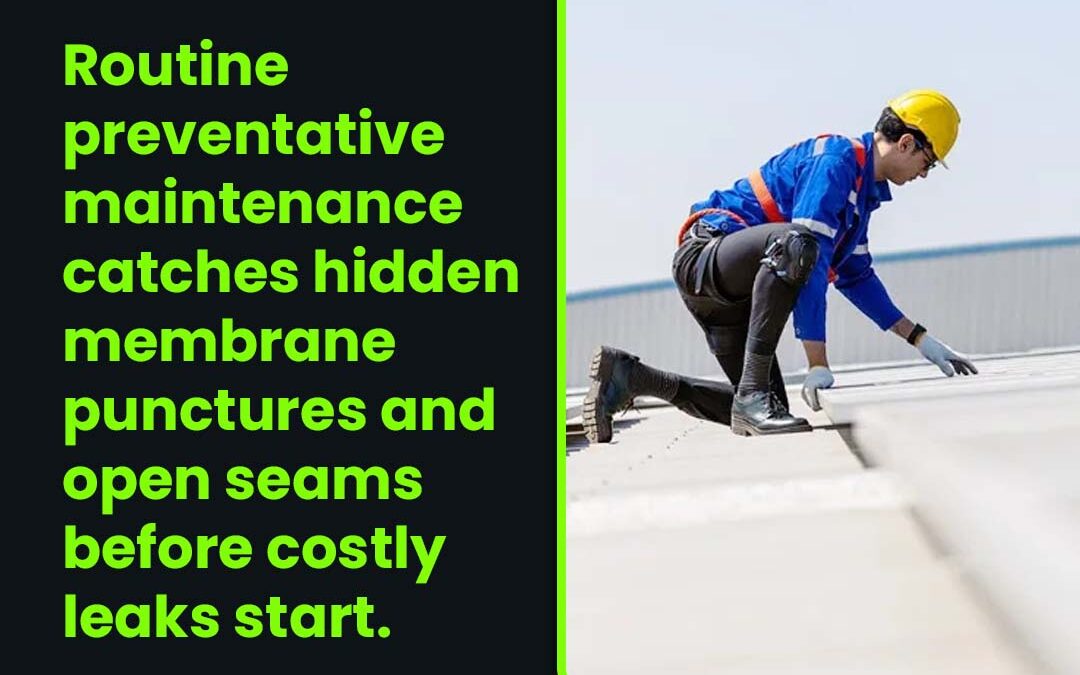
A professional roof coating assessment should not wait for water to appear inside the building. The following conditions indicate that seam or flashing performance has been compromised and an inspection is warranted:
- Visible seam separation along membrane joints, particularly near drains, HVAC curbs, or parapet walls
- Blistering at or near seam lines, indicating moisture has entered the membrane assembly beneath the surface
- Water staining on ceiling tiles or interior walls following rain events
- Unexplained increases in monthly utility load, which may reflect wet insulation losing thermal resistance
- Ponding water that remains on the roof surface for 48 hours after rainfall, concentrating stress on weakened seams
Each of these conditions points to a failure pattern that does not resolve without professional attention from a roof coating contractor.
Why Certified Installation Determines Coating Performance
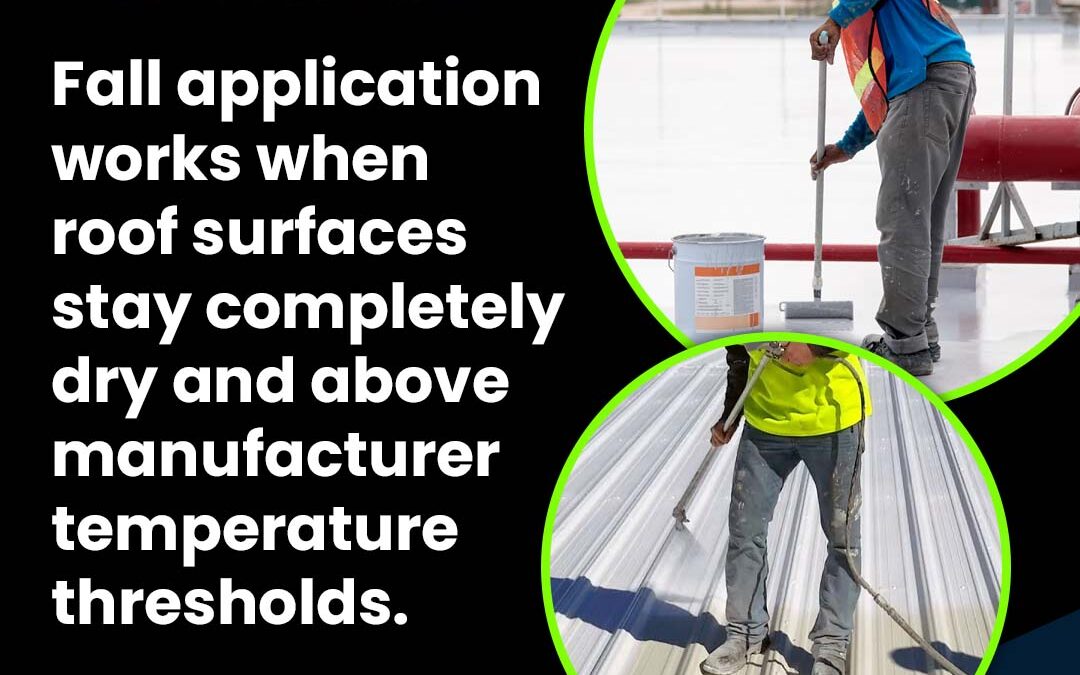
A coating applied over a wet substrate, at the wrong ambient temperature, or using an incompatible product will fail and void the manufacturer’s warranty.
Certified installers follow manufacturer specifications covering surface preparation, moisture verification, product selection, application thickness, and cure time. Each step directly determines whether the coating performs as designed and whether warranty coverage remains valid.
At Tri-County Commercial Roofing, every project follows that standard without exception. A contractor without factory training may apply the correct product but miss a preparation step that compromises the bond. That means a failed repair and a larger scope of work the next time an inspector walks the roof.
Choosing a Certified Roof Coating Contractor in Fort Wayne, IN
Commercial-Only Focus
Tri-County Commercial Roofing works exclusively in commercial roofing systems. Every project starts with an honest, on-site roof assessment. The scope of work, whether a targeted coating repair, full recoating, or a more involved restoration, is determined by what the roof’s current condition actually supports, not by what is simplest to propose.
A contractor who works only in commercial systems brings a deeper understanding of flat and low-slope membranes, drainage conditions, and the operational requirements of business properties. That focus makes a direct difference in how accurately a roof is assessed and how reliably the work holds.
Factory-Trained and Certified Installation
Our team is factory-trained and a certified installer of commercial roofing systems. That training governs surface preparation, moisture verification, product selection, and application precision. It protects the warranty and produces results that hold over the long term.
When you work with Tri-County Commercial Roofing, every step of the process follows manufacturer specifications, from the initial substrate assessment to the final walkthrough. Certified installation is what determines whether a commercial roof coating performs as designed or fails ahead of schedule.
Properties We Serve
Tri-County Commercial Roofing works with property owners in Fort Wayne, IN, and nearby areas across a range of property types, including warehouses, manufacturing facilities, agricultural buildings, multi-tenant commercial properties, and churches.
Schedule Your Commercial Roof Assessment
If your building shows visible seam separation, recurring leaks at the same locations, or interior staining after rain, an on-site evaluation is the right next step. Whether the finding points to a targeted commercial roof coating repair, a full recoat, or a more involved restoration, every recommendation is based on what the roof actually requires.
Contact Tri-County Commercial Roofing at (260) 248-7020 to schedule your assessment. You will receive a direct answer on what your roof needs and the reasoning behind it.