
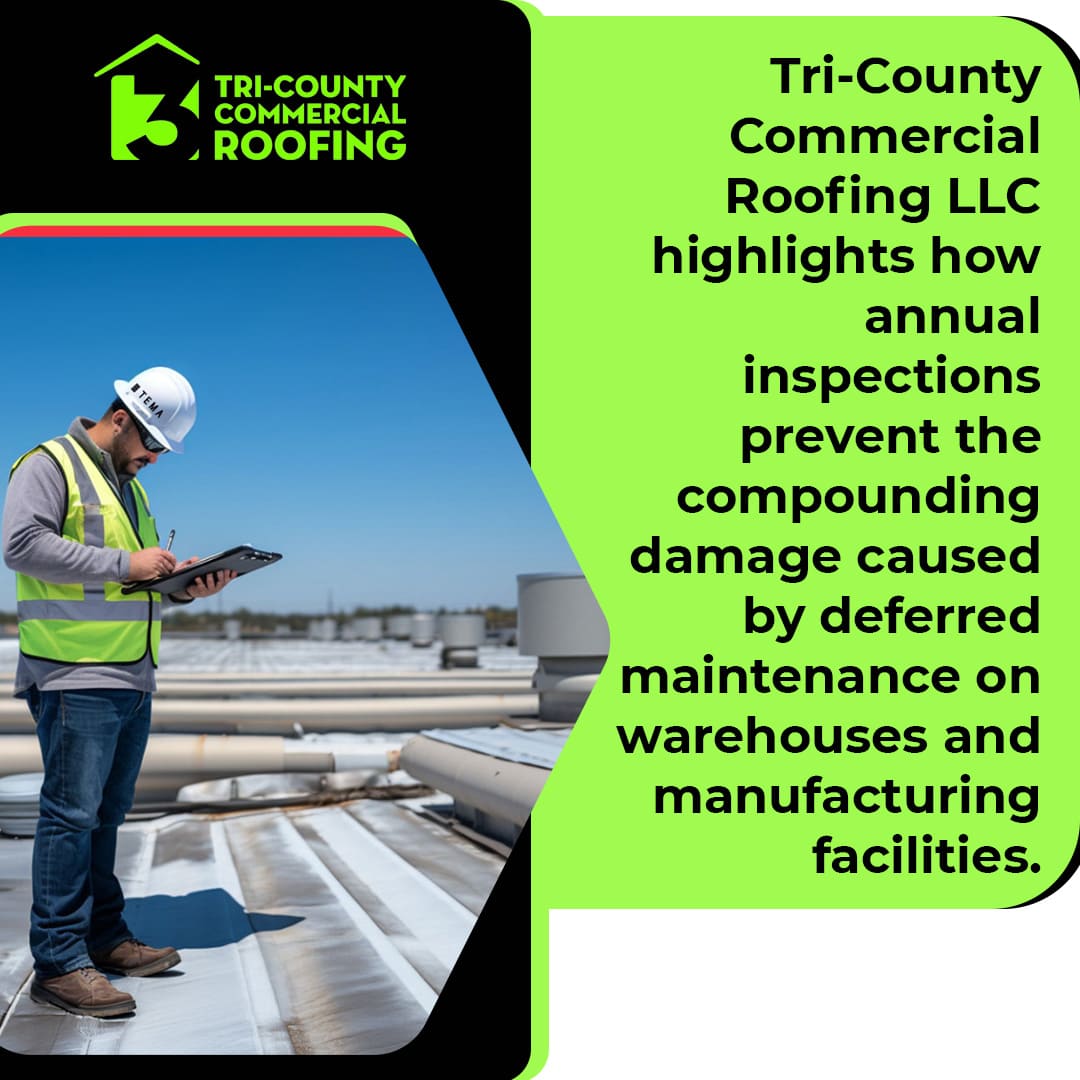
Annual commercial roof inspections deliver a measurable financial return. A professional inspection catches small failures early, before they compound into large scopes of work that disrupt operations and strain capital budgets.
For property owners in Fort Wayne, IN, the decision to inspect on a schedule rather than respond to visible problems is one of the most straightforward ways to control long-term roofing costs. Deferred maintenance does not pause deterioration. It allows failures to develop undetected through northern Indiana’s most damaging weather seasons, turning conditions that were addressable early into scopes that require substantially more time, labor, and material to resolve.
Tri-County Commercial Roofing LLC has worked exclusively with commercial properties across Fort Wayne and the surrounding areas since 2014. As a certified commercial roofing contractor, we have seen firsthand that buildings on a scheduled inspection program face fewer emergency decisions and spend less over the life of the roof than those managed reactively.
The Financial Case for Scheduled Commercial Roof Inspections
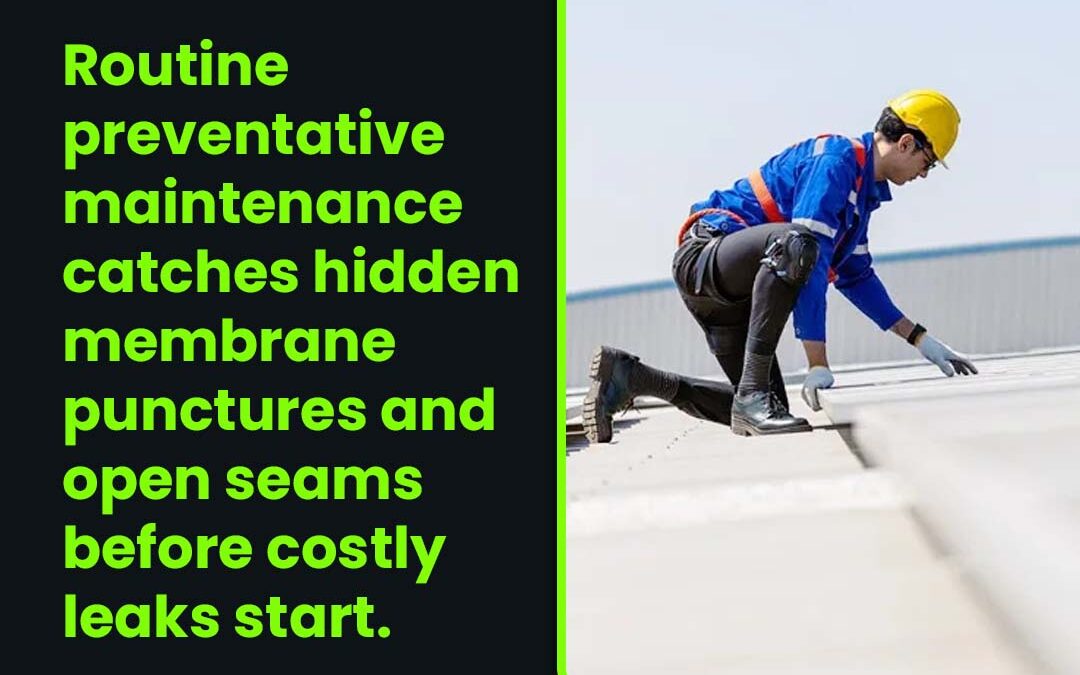
Annual inspections reduce total roofing costs by catching small, addressable problems before they grow into large, disruptive ones. The return on a scheduled inspection comes from the difference in scope between a failure caught early and the same failure left through an Indiana winter.
A minor seam separation caught in the fall is a straightforward repair. Left through repeated freeze-thaw cycles, that same separation allows water to infiltrate the insulation layer, saturate the decking, and expand the scope from a targeted repair into a multi-section remediation project. The difference between those two outcomes is the difference between a routine maintenance line item and an unplanned capital expense.
Early Detection and What It Prevents
The most common failure points on commercial roofing systems include:
- Seam or joint separation where roofing materials meet or overlap
- Flashing gaps at HVAC units, vents, pipe penetrations, and parapet walls
- Blocked internal drains or scuppers that allow water to pool on the roof surface
- Surface bubbling, blistering, or corrosion, depending on the roofing system type
- Soft spots from saturated insulation beneath the roof surface
- Fastener backout or panel separation on metal roofing systems
Each of these conditions starts as a limited, low-cost repair. Going undetected through one or two northern Indiana winters, each one develops into a broader scope of work. For example, a deteriorating sealant bead at a rooftop penetration allows water to enter, freeze, and widen the flashing gap with every temperature cycle. By spring, what was a targeted resealing job has become a flashing failure, requiring more extensive intervention.
Cost of Catching It Early
Scenario 1: Manufacturing facility with a large flat roof
A fall inspection identifies a lifted seam near a drain field. The repair is completed for under $1,000 before the freeze season. Without that inspection, the lifted seam admits water through winter, the insulation layer saturates, and the repair scope expands to include insulation replacement across a wide section of the roof, a project that can run $12,000 to $16,000.
Scenario 2: Church facility with a 20-year-old low-slope roof
An inspection reveals membrane blistering across two roof sections. Blistering occurs when sub-surface moisture pushes upward against the membrane from below. A targeted commercial roof repair addresses both sections before the damage spreads, typically in the range of $4,000 to $6,000, depending on roof size and condition. Without the inspection, the blistering goes undetected for two seasons, and both sections require full membrane replacement, which can reach $18,000 to $22,000 or more.
How Annual Inspections Extend Roof Service Life
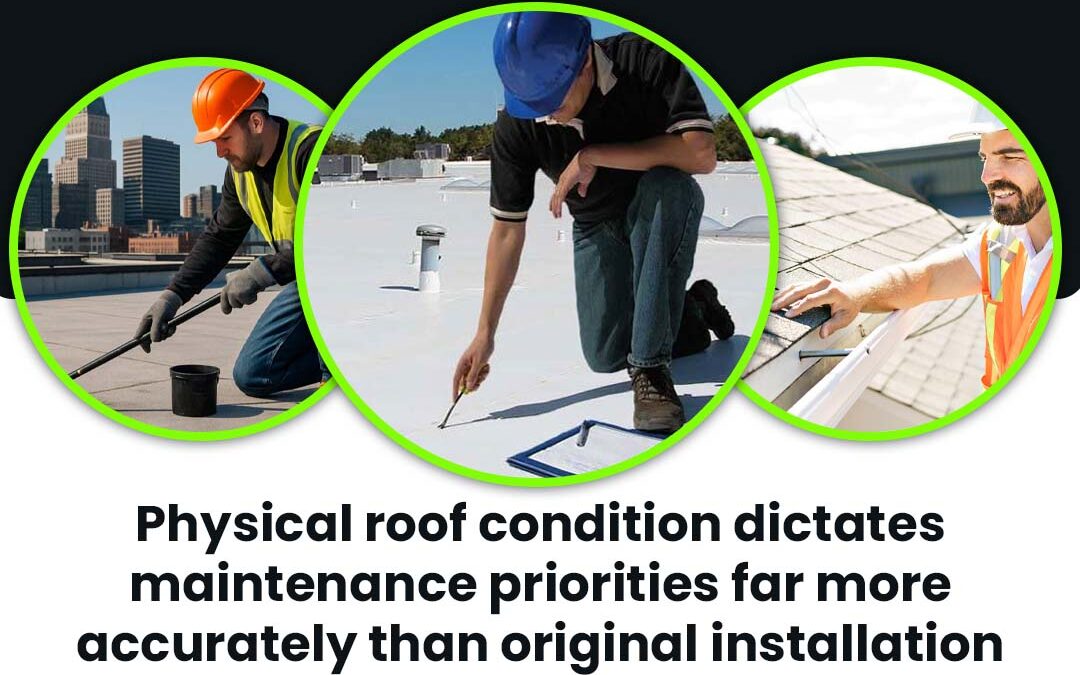
The lifespan of a commercial roof is largely determined by how it is maintained, not just how it was installed. A well-maintained system reaches its full service life. One managed reactively rarely does.
Freeze-Thaw Cycle and Roof Deterioration
The freeze-thaw cycle is the most damaging recurring condition for flat and low-slope roofing systems in Fort Wayne and across northern Indiana.
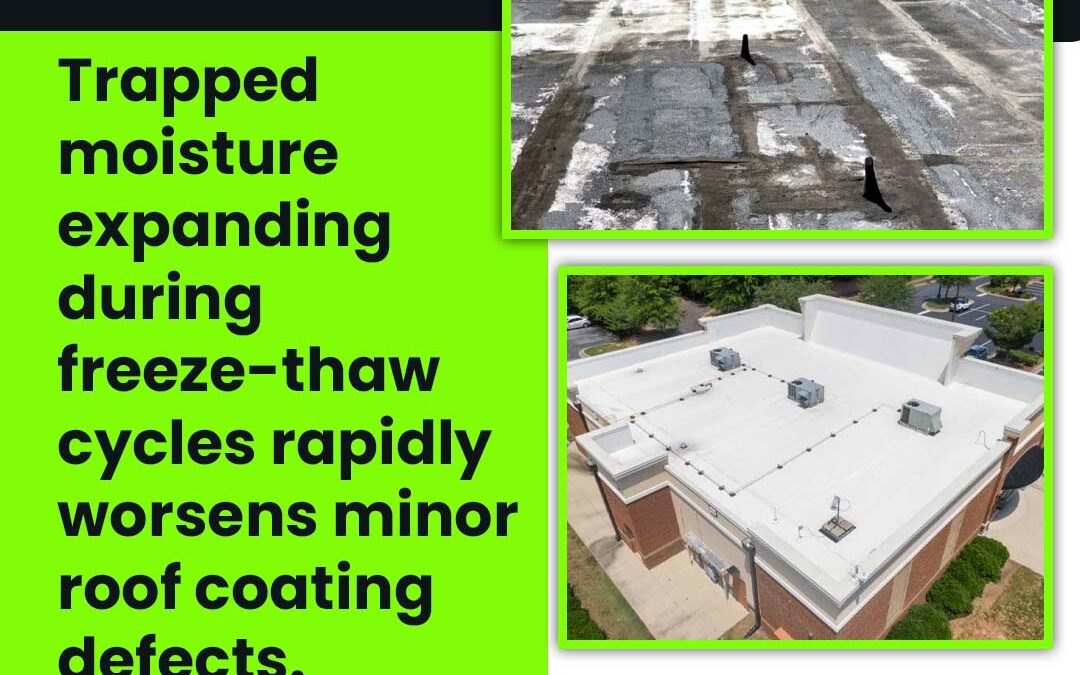
Water infiltrates a small crack or seam separation in the roof membrane, which is the waterproof layer above the insulation and structural decking. When temperatures drop below 32 degrees Fahrenheit, that water freezes and expands, forcing the gap wider. When temperatures rise, the water melts and leaves a larger opening. When it refreezes, the damage compounds further. This process repeats dozens of times through a single Indiana winter.
A seam that is largely intact at the start of winter may be substantially compromised by spring after repeated freeze-thaw exposure. A fall inspection catches that seam while the repair remains straightforward. Reactive management finds it in spring, when moisture has already worked into the insulation layer, and the scope has grown.
Maintenance Frequency and Its Effect on Lifespan
The NRCA (National Roofing Contractors Association) recommends a minimum of two professional inspections per year: one in spring and one in fall. For northern Indiana properties, those two windows align with the climate’s most damaging seasonal transitions.
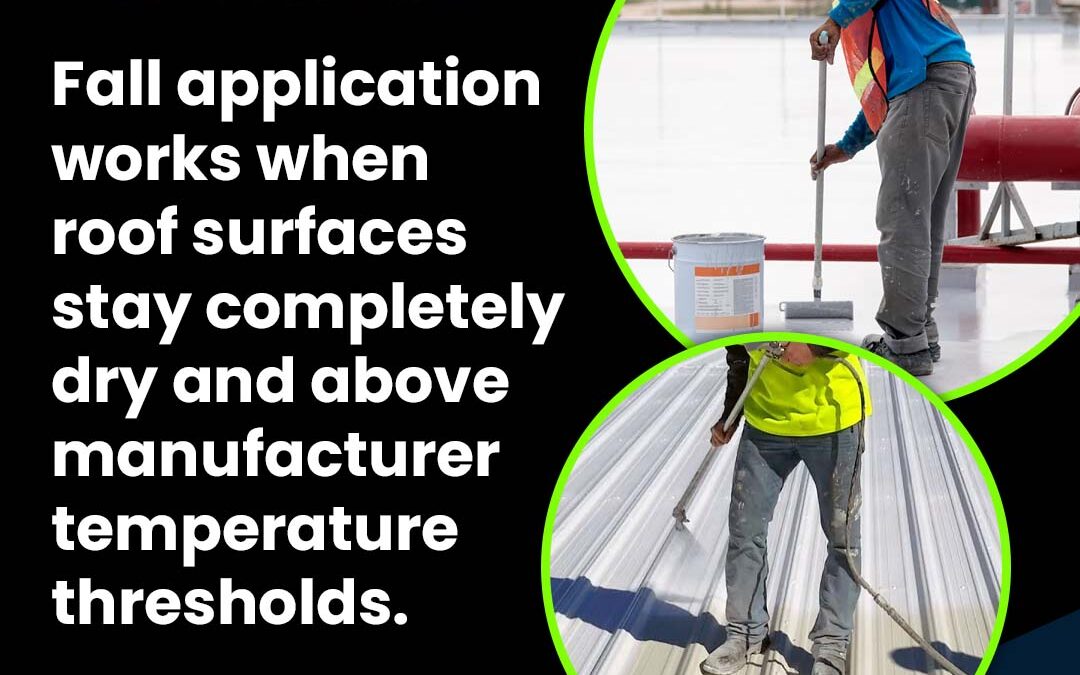
Spring inspections identify what the winter put the roof through. Fall inspections prepare the system for the next freeze season. Post-storm inspections after significant hail, high winds, or heavy snow accumulation catch damage that is not visible from the ground.
Warranty Compliance and What It Protects
Most commercial roofing manufacturers require documented periodic inspections to keep warranties valid. Skipping inspections can void warranty coverage at the exact moment a property owner needs it most.
A manufacturer’s warranty on a roofing system is a direct financial asset. It covers material defects and, in many cases, labor for remediation within the warranty period. A long-term membrane warranty voided due to undocumented maintenance leaves the property owner carrying the full cost of any failure that the warranty would otherwise have covered.
Annual inspections with written findings reports create the maintenance record that manufacturers and insurers reference when warranty or claim questions arise. That documentation protects coverage throughout the intended service life of the system.
What a Professional Commercial Roof Inspection Covers
A qualified commercial roofing contractor conducts an assessment that goes well beyond a surface-level visual walk.
Roof Surface Evaluation
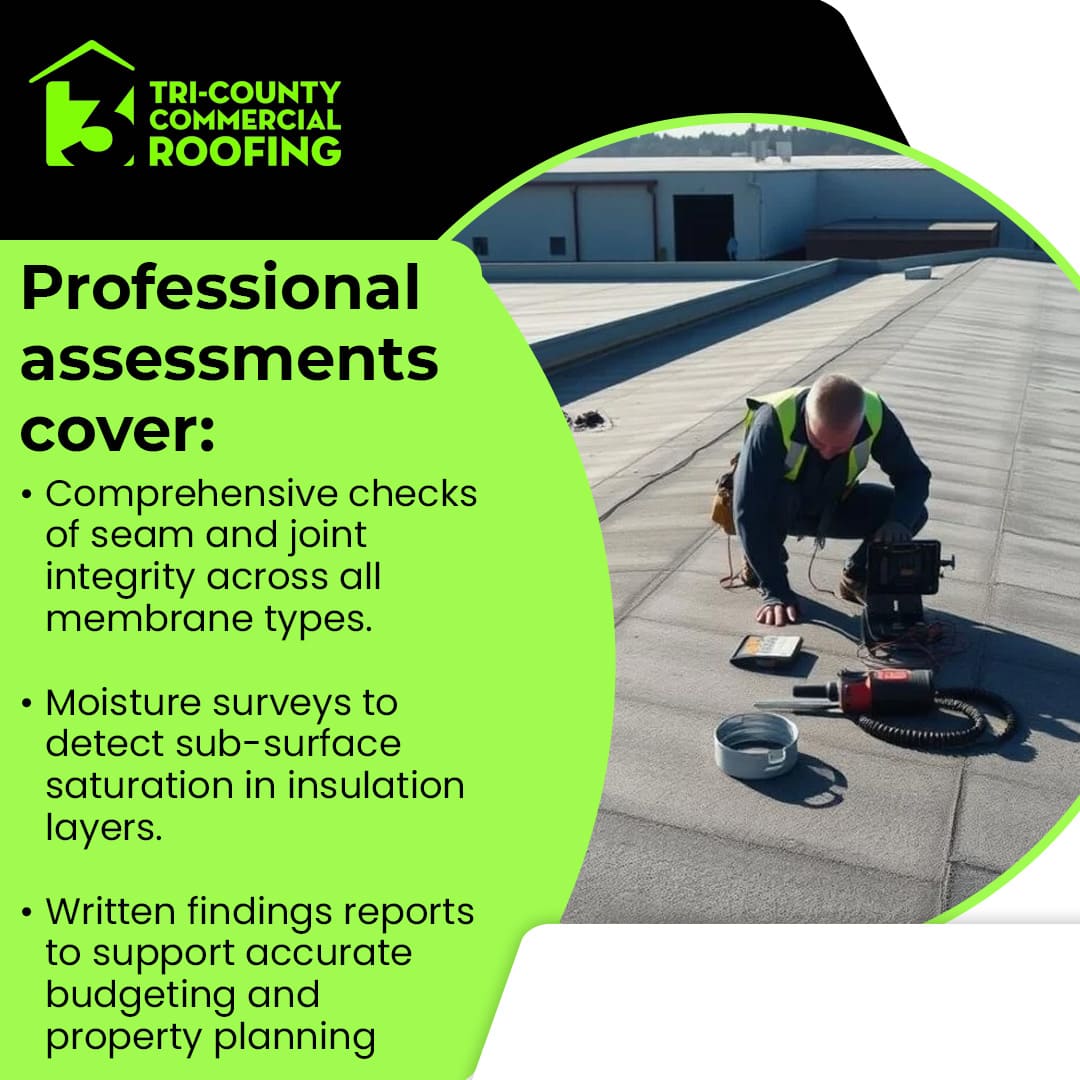
The inspector walks the full roof surface and documents its condition, including wear patterns, surface damage, and areas showing accelerated aging. On membrane systems, this includes checking for tears and loss of flexibility. On metal roofs, the inspector looks for corrosion, fastener backout, and panel separation. On built-up or modified bitumen systems, the focus includes surface erosion, exposed reinforcement, and alligatoring, which is a pattern of surface cracking that indicates the material is drying out and losing its waterproofing integrity.
Seam, Joint, and Lap Assessment
Every roofing system has points where materials meet, overlap, or transition. These are the most common water entry points regardless of system type. On single-ply systems, the inspector checks membrane laps and seam bonds. On metal roofs, panel seams and ridge caps are evaluated. On built-up systems, lap joints and flashing terminations are assessed for separation or bond failure.
Flashing Review at All Penetrations
Every point where the roof surface meets a different material requires a sealed transition. HVAC units, pipes, vents, skylights, and parapet walls all create penetration points where flashing seals the gap. Deteriorating sealant or lifted flashing at any of these points is a direct water entry risk on any roof type.
Drainage System Inspection
Internal drains, scuppers, and gutters are checked for blockage and flow restriction. Ponding water, which is water that remains on the roof surface for more than 48 hours after rainfall, accelerates surface deterioration and concentrates freeze-thaw stress at low points. This applies equally to flat membrane roofs, low-slope metal systems, and built-up assemblies.
Sub-Surface Moisture Assessment
Sub-surface moisture testing identifies saturation in the insulation and substrate layers before it reaches the structural deck. Saturated insulation loses thermal resistance, adds dead weight to the roof structure, and creates ongoing moisture pressure against the decking below. Catching saturation early allows for targeted remediation rather than full-system replacement.
Written Findings Report
Every inspection should produce a written summary of conditions observed, areas of concern, and recommendations for commercial roof repair or further assessment. This report documents current roof conditions and provides the maintenance record that manufacturers and insurance carriers reference in warranty and claims situations.
From Scheduled Inspections to Smarter Capital Decisions
What Happens When Inspections Are Skipped
Buildings managed reactively face a predictable pattern of escalating repair scopes and higher cumulative costs than those on a scheduled inspection program.
The pattern develops as follows:
- Year 1: An isolated failure is patched at the surface. The underlying cause, whether a seam failure, flashing gap, or deteriorating membrane edge, is not fully assessed.
- Year 2: A second failure appears nearby. Additional patching follows. Insulation in the affected section has begun to absorb moisture, but no sub-surface testing has been conducted.
- Year 3: A third failure develops in a different area, indicating broader membrane deterioration beyond the previously patched zones.
- Years 4 to 5: Moisture reaches the structural deck. The scope now requires deck remediation, full insulation replacement, and commercial roof replacement across a large section of the building, rather than the targeted repair that was an option in Year 1.
At each stage, the cost of intervention grows and the available options narrow. The property owner who addresses the Year 1 failure through a scheduled inspection retains control of the outcome. The one who reaches Year 5 is responding to failure, not planning for it.
Scheduled Inspections and Capital Planning
For property owners managing warehouses, manufacturing facilities, multi-tenant buildings, or institutional properties, the roof is one of the largest capital assets on the building. Roofing decisions affect operating budgets and business continuity for years.
Annual inspections give property owners the documented condition data to plan roofing decisions on their own schedule, rather than respond to system failure under time pressure. A roof assessed consistently produces predictable information. A roof managed reactively produces surprises.
Why Fort Wayne Property Owners Work With Tri-County Commercial Roofing
Tri-County Commercial Roofing conducts professional inspections for commercial properties across northern Indiana, including Fort Wayne and nearby areas. Every inspection covers the full roof surface, drainage systems, seams, and flashings, and produces a written report of findings.
When targeted commercial roof repair is the appropriate course, we execute it to manufacturer specifications, protecting warranty coverage and addressing the actual source of failure. When a system has deteriorated past the point of practical repair, we provide a direct written assessment so property owners can make planned decisions rather than reactive ones.
Merle Bontrager, founder and factory-trained certified commercial roofing contractor, leads every Tri-County Commercial Roofing project with installation and inspection standards that meet manufacturer requirements. Unlike general contractors who take on commercial work alongside residential projects, Tri-County Commercial Roofing focuses exclusively on commercial properties, bringing a depth of field experience that applies directly to the demands of northern Indiana’s climate.
Schedule a Commercial Roof Inspection in Fort Wayne
A scheduled inspection gives you a clear picture of where your roof stands and what it needs. From routine maintenance to commercial roof replacement, Tri-County Commercial Roofing provides honest assessments and dependable execution. Contact us at (260) 248-7020 to schedule your inspection in Fort Wayne or anywhere across northern Indiana and the surrounding Midwest.